A letter arrives saying that a friend in Canada was killed in an accident. It asks me to arrange to have some prayers done for Nina.
The monks at Tengboche are busy, but someone suggests the anis (nuns) at Devuche, the little nunnery twenty minutes’ walk away. Devuche sits in a meadow at the edge of the rhododendron forest in a quiet, peaceful place.
At Devuche, I arrange for the anis to say some prayers the next day. However, in the morning, only the abbess and one elderly nun are present in the kitchen.
The abbess hands me some of the 50-rupee notes I had given her the day before. “Take this to the blind ani who can’t come do the puja (prayers) in the gonda but can say prayers. Take this to the ani in this house right here who is in retreat.”
I knock on the door of the ani in retreat. An elderly person wearing robes and a traditional winged yellow hat opens the door. I ask, “Would you please say some prayers for a friend of mine who died 49 days ago?”
She gestures for me to enter. Her small home is clean and tidy. I sit on a wide bench stretching across the end of the room while she prepares tea on the little clay-lined, one-pot burner. She asks the name of my friend who has died. “Ni-na,” she repeats as she notes it down in Tibetan script on an envelope.
“How long have you been in retreat?” I ask.
“Twenty years,” she pauses, “and thirteen years. For this time, I have not left this little compound.
“I am from Nauche. My family did business in Tibet. When I was eight years old, I first went to Rongbuk. There I received a blessing from Zatul Rinpoche and took my first vows to become an ani with Tulshi Rinpoche.
“When I was twenty, I was here in Devuche and had been an ani for several years. A rich man from Solu wanted another wife after his first passed away. He first sent one and then two men from Solu to Nauche to ask my mother in Nauche while my father was in Tibet trading. She sent them away.
“Then, he got several men together — about 11 of them just to come get one woman. They surrounded my house here in Devuche. I went to bed but could not sleep. Finally, I escaped out a window late at night and hid in the river gorge.
“They looked in the woods and all the houses. I hid by the river for two days and on the second night wondered what to do. I had no food, no shoes, just the robe I grabbed as I crawled out of bed.
“Finally, I worked my way along the river and up through the forest to Tengboche. Rinpoche could not hide me there, because monastery rules do not allow women to stay.
“A man who had just come from Tibet a year before agreed to help me. We hid in the day and travelled at night through Thame and over the pass to Tibet. In those days it took four days to walk across the Nangpa La (pass) to the first village in Tibet, then ten days to Shigatse and ten more to Lhasa. I stayed there for ten years until I was thirty.
“When the Chinese became really strong in Tibet, I was studying at a nunnery higher in a valley. Rinpoche and his half-brothers were at a monastery nearby. They came to see me. We decided it was time to return to Nepal. I came to Devuche and started my retreat.
“For six weeks after I arrived here in Devuche, we did not know if the Dalai Lama was alive or dead. Then finally one day I heard that he was in Kalimpong. What a relief.” As I stand up to leave, I pull another 50-rupee note from my wallet. “Would you also please do some prayers for the book I’m working on?”
Ani-la holds the bill thoughtfully for a moment before setting it on the windowsill among her papers.
“People always come and ask me to say prayers for this and for that. So their son will get into this school or that this business venture will be successful. They do not understand that when these prayers bring about general good fortune or merit, it comes from within, from within themselves.”
She hands me a paper and a pen.
“I want you to write down these prayers so you can say them yourself for good things to happen. Om Ah Hung Betza Guru Padme Siti Hung is to Guru Rinpoche. The next is Om Mani Padme Hung to Chenresig. Om Ah Mi De Wa Hri to Opagme.”
I obediently write down the mantras as she hovers above me in her winged cap. “Say 108 of each mantra. Say them every day if you can. As you say them, always think of going to the place of the gods, but always remember…”
She reaches out and touches my chest. “Always remember that the gods are right here within you.”
Looking at both science and religion or mythology as our way at explaining the universe around us ….
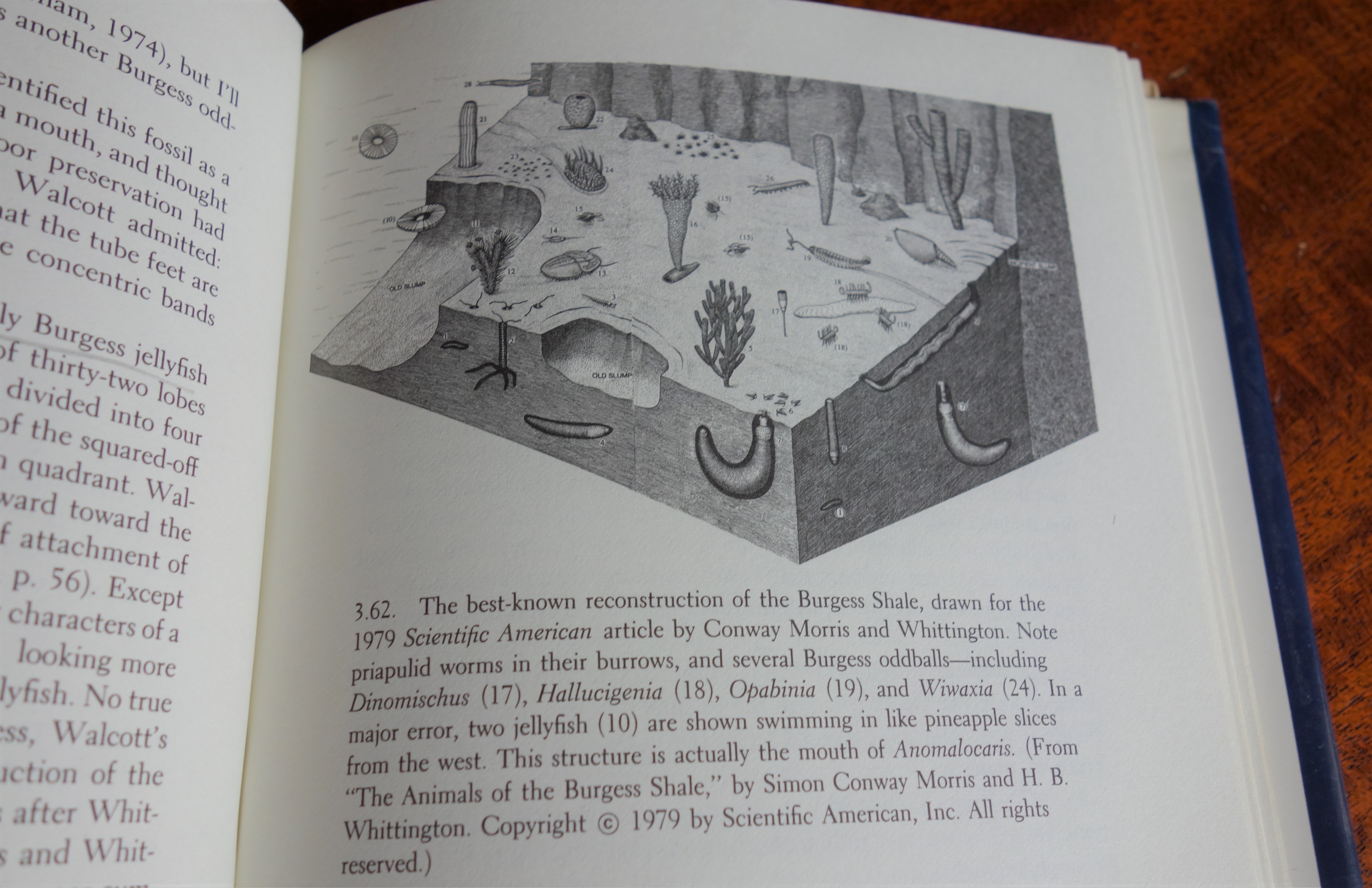
It all becomes relative to time and new observations. In the early 1980s, when I worked in Yoho National Park, we were just beginning to find more about the Burgess Shale fossils high in the Canadian Rockies in beds of shale once laid down as mud on the floor of an ancient ocean.
To introduce these explanations, I would tell the people who came on the guided hides the creation myth of the world by the Blackfoot nation.[1]
In the story, the legendary “old man” is on a raft on the great water or ocean. With him are a loon, a muskrat, and a beaver. He asked each animal to drive down to get some mud from the floor of the ocean. The loon tried but could not dive deep enough. The muskrat tried and tried but also failed. Then the beaver tried. He was gone for a very long time. The old man was about to give up hope when off in the distance, he saw the beaver floating on his back. The old man paddled over the raft to the beaver. There clutched in the beavers paw was a piece of mud. The old man took the mud and rolled it in his hand and created the earth. He spread it out to make the plains. He piled it up to build the mountains. Then, he made the people and the buffalo. Such was how the indigenous people described the creation of their world.2
The story was useful, especially when the students of an evangelical college would come to see the place where they believed that God had touched the earth to stop the great flood. The commonality of water covering the earth in both the creation myth and the biblical story helped introduce the scientific explanation. I would mention that science, religion, and myth are the ways that us humans explain or try to create an explanation at the world around us.
The geological story of the movement of the continental plates on the earth’s surface, of how once 300-500 million years ago, North America was a barren sandy land that slopped off to an ocean a lay its western edge, about where the rocky mountains run today. Eons worth of sand and water layer accumulate at base of an underwater cliff. Layer upon layer, sometimes sand or clay or mud flowed off the cliff to bury the rich diversity of sea creatures. Like on land had not yet evolved. As the Pacific Ocean plate inlet eastwards towards North America these sea sediments this mud from the bottom of the sea.
Meanwhile, the explanations of the creatures themselves are fascinating stories. In the early 1980s, the interpretation of two specimens was that they were a small crayfish and the base of a jellyfish. Teams of scientists from the Royal Ontario Museum worked relentlessly examining the shale beds each summer on a mountain side. Those at us working for the national park relayed their interpretation to the public – explaining the trilobites, crayfish, jellyfish, etcetera, in the rich biodiversity of the ancient Cambrian era seas.
In the early 1990s, I returned to living in Canada and began guiding interpretive hikes to the Burgess Shales.
But, the story had completely changed.
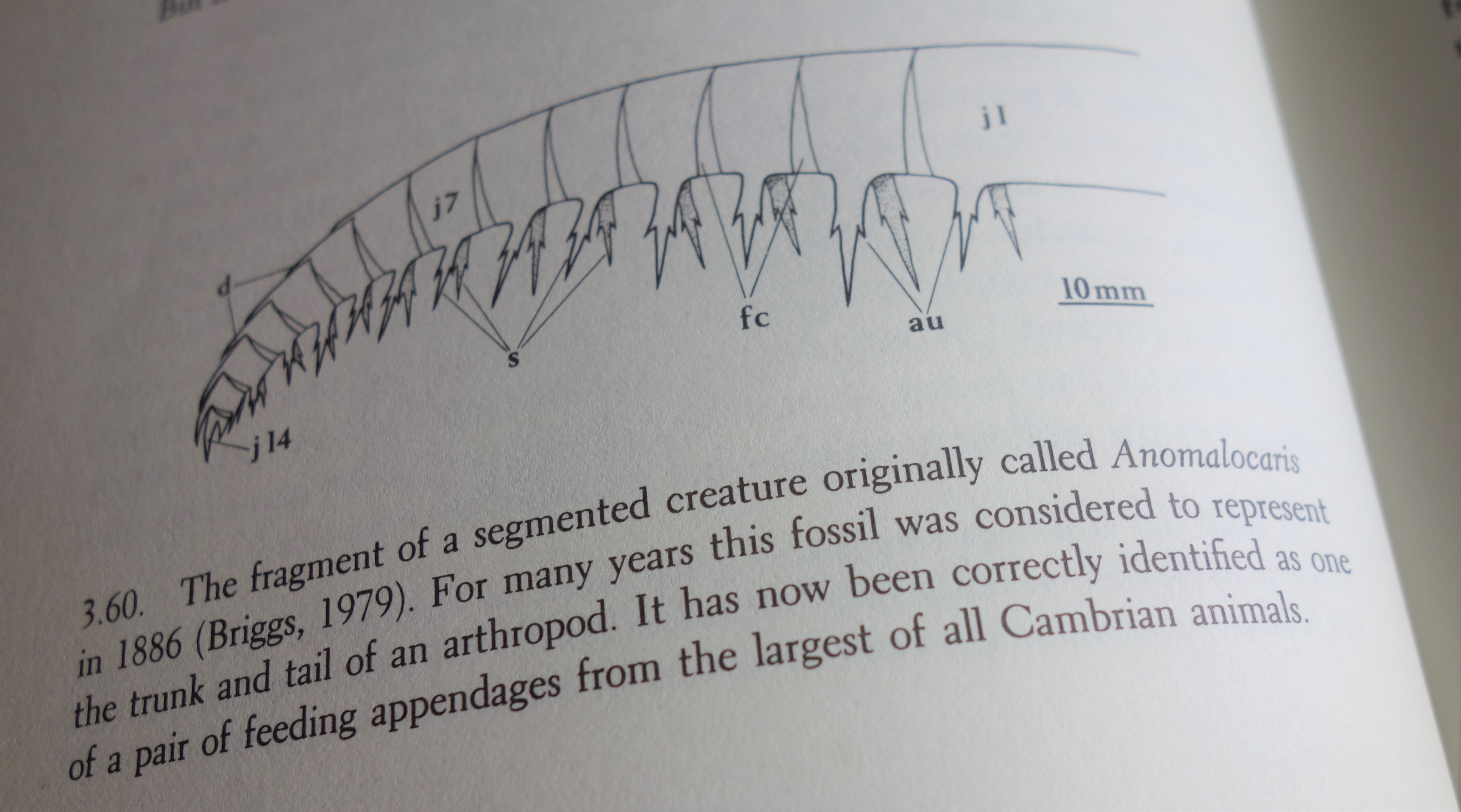
The ‘crayfish’ was found to be the pincer-like arms of a huge fossil 18 inches long. The creature, called Anomalocaris, used these arms to sweep smaller creatures from the seafloor and into its round sucking mouth – which was the fossil previously thought to be the base of the jellyfish.
The ancient crayfish and jellyfish ceased to exist. The scientific explanation had changed.
Stephen Jay Gould described the story of Anomalocaris in his 1989 book Wonderful Life, as “a tale of humor, error, struggle, frustration, and more error, culminating in an extraordinary resolution that brought together bits and pieces of three ‘phyla’ in a singe reconstructed creature, the largest and fiercest of Cambrian organisms.”
Many of the Cambrian animals present had strange body parts and little resemblance to other known animals. Opabinia had five eyes and a snout like a vacuum cleaner hose. Hallucigenia was originally interpreted upside down, walking on its bilaterally symmetrical spines. In 1991, reinterpretations described Hallucigenia as a legged worm-like creature. The tentacles were reinterpreted as walking structures and the spines as protective armor.
The story keeps changing and evolving with discoveries of new outcrops of Burgess Shales and reexamination of the strange and wonderful fossils within. Scientists reconstruct and reinterpret and keep looking at all the possibilities.
While compiling information for the Sherpa museum, conversations had often encompassed aspects of philosophy, psychology, and spirituality, then wandered to the questions we seek to answer with religion or science: How did the earth begin? What happens after death? What is our relationship to nature?
I saw an acceptance of mystery and of questions we just cannot answer. Soon, I realized that one layer of meaning reveals more queries within. The more one starts to understand, the more one realizes all there is to question and explore.
Myths and religion may change with retelling or stay unchanged despite changing times. It is all in our interpretation whether science, religion, or myth.
* Featured image: In 1909, while in the Canadian Rockies near Field, British Columbia, Charles Doolittle Walcott (1850-1927) discovered what has come to be known as the Burgess Shale. Named after Burgess Pass near the location of his discovery, the shale Walcott collected contained carbonized organisms of such abundance and age that they subsequently provided the foundation for study of the Cambrian Period in Western North America. Walcott, fourth Secretary of the Smithsonian, often took his entire family on collecting trips. According to the Smithsonian institution, this image shows Walcott, his son Sidney Stevens Walcott (1892-1977), and his daughter Helen Breese Walcott (1894-1965) working in the Burgess Shale Fossil Quarry, c. 1913.
The heavy wooden door creaks open on to a small verandah encircled by potted orange marigolds. Inside a small house, the Rinpoche of Tengboche sits cross legged on a wide bench at the end of a room full of photographs and books.
Wrapped in a heavy maroon robe, Rinpoche gestures for me to take a seat next to an elderly Sherpa man on a bench beneath large windows.
The Sherpas are renowned through the literature of adventure, for their work as high-altitude porters and guides on mountaineering expeditions. However, this reputation focuses on one occupation, rather than on the Sherpas’ rich cultural heritage.
The museum was mostly about what the Abbot of Tengboche calls the Sherpas’ “inner culture” and the importance of ceremonies that link their spiritual and physical lives. The preparation of the museum took time because it was essential to first know the people and the many dimensions of their culture in order to accurately and concisely depict it.
Rinpoche is the Abbot of Tengboche monastery in the Khumbu valley. The Sherpas regard him as the reincarnate of the monastery’s founder. Everyone calls him by his title, Tengboche Rinpoche, and rarely by his given name, Ngawang Tenzing Zangbu. Tibetan Buddhists reserve the title Rinpoche for special teachers and their reincarnates. The Buddhist people of the Himalaya revere thousands of rinpoches in Nepal, Tibet, Bhutan, and India.
Rinpoche realized that there were many misinterpretations and misunderstandings about Sherpa culture. To promote understanding of the culture, he has built a museum to first inform foreign visitors. However, his more crucial audience is young Sherpas, who will see visitors taking an “interest in our culture, and then take pride in our heritage.”
My work is to interpret his discussions to offer explanations of Sherpa culture to which people can relate. The work involves researching the information, taking photographs, planning the displays, coordinating translations of texts into Nepali or Tibetan, fabricating the displays, and then putting it all together in the museum building.
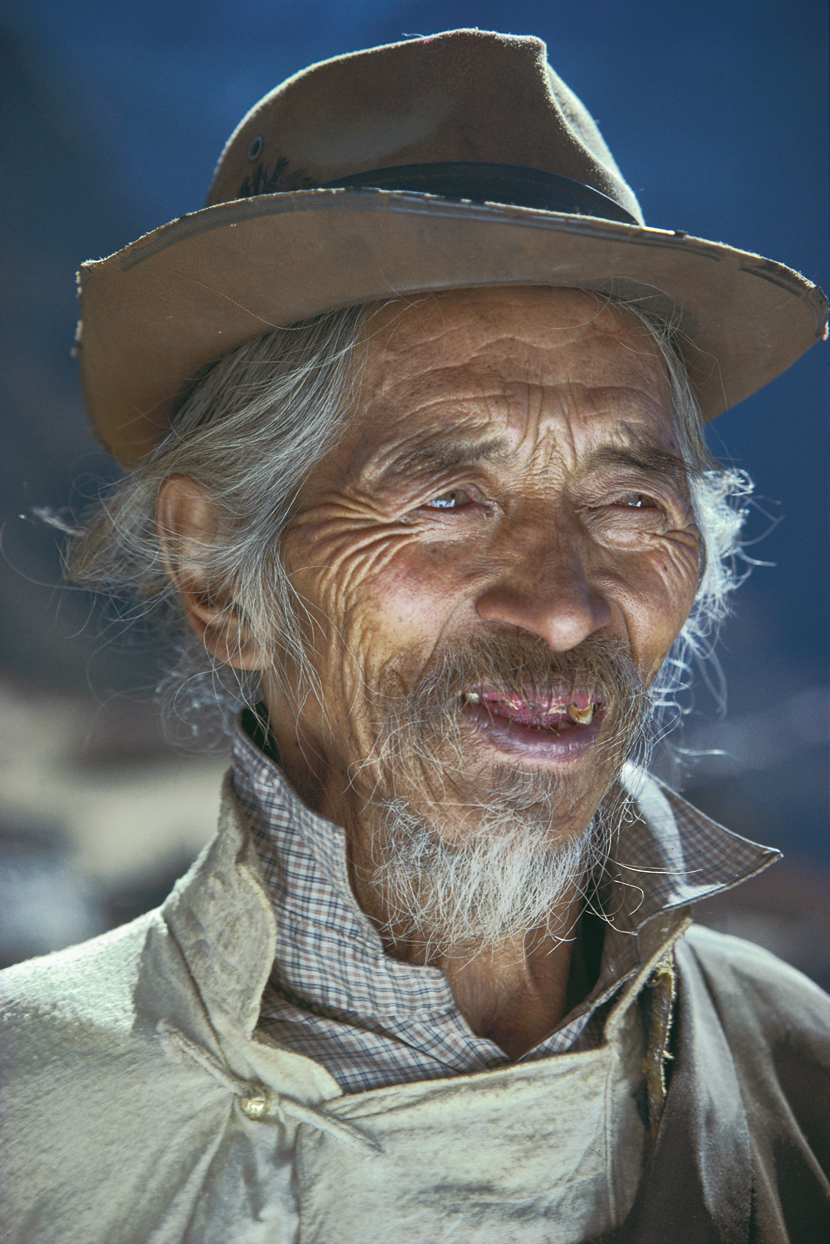
Rinpoche’s guest is a village elder, Khonjo Chombi, who is renowned for his knowledge of old Sherpa stories, songs, and traditions. Sherpas acknowledge him as a guardian of their culture.
The late Khonju Chombi Sherpa, 1985
“Please, show Khonjo Chombi through the museum,” he asks.
Khonjo Chombi has provided much of the information and inspiration for the museum’s display texts. He has also advised most foreign researchers of the Sherpas, the first and best known of whom was the anthropologist Christoph von Furer- Haimendorf, who first came to Khumbu in the mid-1950s.
Cultural Centre and Tengboche Monastery, 1988
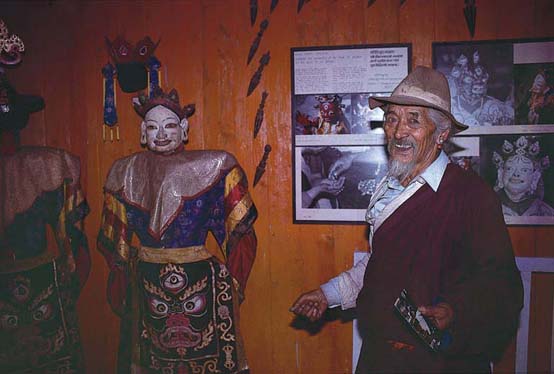
Inside the museum, Khonjo Chombi inspects the historical photographs Haimendorf donated. He names each person in the photographs. “Here is Ngawang Dorje, Thakto Kalden, Passang Rinchen; they have all passed away. There I am thirty years ago; Haimendorf took that photo. There I am last year; you took that photo.” He smiles.
The panel text introducing the Sherpas has generated controversy. It reads: “The Sherpas started migrating from Tibet to these secluded valleys 600 years ago.” A couple of foreign anthropologists insist that the Sherpas’ entry into Khumbu from Tibet was about 450 years ago and that 600 years ago is wrong.
Rinpoche and Khonjo Chombi say these modern interpretations do not consider the first Sherpa, Phachhen, who discovered Khumbu 600 years ago. We used the 600- year date, since the purpose of the museum is to tell the Sherpas’ story from their own point of view.
A mural in Tibetan script outlining the Sherpa clans covers the end wall of the museum. The position of each name shows when the clan either arrived from Tibet or separated from a larger group. Khonjo Chombi points out his clan name, Thakdopa.
The father’s lineage determines one’s clan membership. Four main clans originally came from Kham, in eastern Tibet, to Solu-Khumbu. Each clan gave rise to several brother clans. Continuous migration has brought many new clans into the area.
Other displays describe traditional clothing, household goods, jewelry, and crafts using looms and spindles. One panel shows monks printing prayer flags on a wooden block and a stone carver chiseling a prayer stone.
Khonjo Chombi asks, “You have a photo of Au’Kinzum chipping away to make mani stones. Why isn’t there a photo of old Phurwa carving a wood block?”
“For three years I tried to persuade Phurwa to let me photograph him working, but he would not even describe how he makes the blocks. So all that we have is photographs of monks printing prayer flags on the blocks.
“Last month, Phurwa was at Tengboche doing carpentry work while we were setting up the museum. He visited the museum every day to see the new displays. The day this display with the stone carver went up, Phurwa asked why I had not photographed him carving the wood blocks. I told him how I’d tried many times. The next day he brought that huge old wooden tea cup as a gift for the museum.”
Carver of prayers into stone
Khonjo Chombi laughs, and then grows serious. “No matter how much you explained, it was hard for many people to imagine what the ‘museum’ would be. This is the first museum old Phurwa has ever seen. But, we have a bigger problem. These craftsmen’s sons have not learned to carve wooden blocks or mani stones. When these men are gone, no one in Khumbu will make these religious things.”
“Can only sons learn these crafts?”
“No, anyone could learn their crafts, but before we followed our father’s occupation. I learned trading and politics from my father. My sons run a trekking business. Our occupations are changing, but I hope someone will keep making wood blocks and mani stones.”
The second floor has displays about Sherpa religion. Balancing the many levels of explanation was a challenge when writing the display texts. Spirituality, metaphysics, and pragmatism all have a place in layers of meanings in the Sherpas’ practice of Mahayana Buddhism.
While compiling information for the museum, I often found that conversations encompassed aspects of philosophy, psychology, and spirituality. Often the subjects we discussed wandered to the questions we seek to answer with religion or science: What happens after death? What is our relationship to nature? To our symbols in the environment?
Over the years, my questions turned from the intellectual to the intuitive. I experienced the culture rather than question it. Life with the Sherpas revealed different ways of seeing the world. It peeled away my preconceived notions so that I appreciated the significance of rituals, traditions, and symbols.
On the display about Tengboche monastery, Khonjo Chombi inspects photographs of Rinpoche through the years, beginning as a teenager when the first Westerners explored the southern approach to Everest. Other photographs show him in present day activities. He remarks, “Rinpoche has worked hard to uphold our traditions.”
Khonjo Chombi examines a mannequin dressed as a traditional village lama. “Some lamas are married and some are celibate thawas [monks]. Not all monks are lamas. The married lama in this photo has a family. He studied with his father and other teachers so that he can perform the village ceremonies.”
Khonjo Chombi in completed museum, 1988
He sees a bone trumpet, a kagling, in the mannequin’s hand. I explain, “We did not have an old kagling; had only a new copper one. Two weeks ago, a monk returned from the post office in Nauche with a battered envelope. The address was to ‘Tengboche Monastery, near Mount Everest, Nepal’. There was no letter or return address but the stamp was from Germany. Inside was this old-style kagling made of bone. We’ll never know where it came from, but it came just in time for the museum opening.”
Khonjo Chombi continues around the museum. Suddenly he sings an old Sherpa folk song and dancing. Soon an audience of monks and foreign trekkers surrounds Khonjo Chombi. As we applaud, he smiles. His songs and dance become the museum’s real opening celebration.
I will always be grateful to Tengboche Rinpoche for the opportunity to work with him on the Sherpa Cultural Center for several years. Sherpa friends introduced me to a new way of seeing the world through everyday life. Whether monk or shepherd, they know who they are and what they believe as “Sherpa people”.
Living in another culture forced me to think about how it works, to confront the ironies and inconsistencies of a different way of being. Soon, I realized that one layer of meaning reveals more queries within. The more one understands, the more one realizes all there is to question and explore.
Looking at other cultures as different from our own, we split the whole into parts. We analyze what we see happening and ask why. For people of the other culture, it is their way of life. We examine the oddity of different traditions and customs rather than the inner purposes that might bring us into an understanding of the culture. We end up looking at how the “other” culture differs from our culture rather than at our commonness in the wholeness of humankind.
While working on the museum, I saw and questioned the ironies of my own culture and gained a new way of looking at myself and at my own way of life. I was moved by what I saw and experienced. I became a believer in the value of inner culture that manifests itself in everything we do — in small actions in everyday life, in our interactions with everyone we meet, and in what we think and say.
I came to see that while outside cultures divide us, inner cultures, the core of all religions and beliefs, can bring us together.
This opportunity enriched my life, for which I will always be grateful.
The Khumbu valley, with Jomolungma (Everest), Khunde and Khumjung villages, and Ama Dablam
“This valley is sacred to us Sherpa,” says Tengboche Rinpoche. “The only way to come or leave here is to climb over a very high pass or to trudge up the steep gorge of the Dudh Kosi river. We live in a protected place.”
Rinpoche then recites Sherpa narratives describing how special spiritual powers were used twice to create a beyul, a sacred sanctuary, in the Khumbu valley — first to sanctify it and then to open it as a sanctuary.
“One of our religious texts foretold that in the future … the religious people would have to run away to secluded mountain valleys described in religious texts.”
When helping to establish Buddhism in Tibet, Guru Rinpoche (founder of Himalayan-Tibetan Budddhism) predicted that there would be times of trouble when some people in the Tibetan region would have to flee their homes. He also sanctified and hid many valleys in the Himalaya to serve as sanctuaries.
Guru Rinpoche instructed some of his pupils to write guidebooks which hid in the rocks and earth. These hidden teachings would offer directions on how to get to the sanctuaries. In times of trouble, various inspired lamas and their devout followers would be able to find these places by following the directions in the books.
Guru Rinpoche painting on a cliff face.
The Khumbu valley is one of these hidden sacred sanctuaries, these beyuls.
“When there were troubles hundreds of years ago, we know that the ancestors of the present-day Sherpas left Kham in far eastern Tibet because it was against their religious belief to fight. They moved westward along the north side of the Himalaya.
“They were looking for a beyul, a sanctuary, because the lamas leading them were follow- ing the directions recorded in a religious text. The lamas needed not only the skills to read and understand the book, but also the spiritual power to recognize clues in the landscape, in order to discover the beyul.”
The Sherpa ancestors crossed the Himalaya through a pass to the west of Khumbu. They started small homesteads lower down near present-day Lukla. The first Sherpa to enter the beyul, Phachhen, struggled to walk up the wild canyon, clambering up and down around cliffs, boulders, and trees. Eventually, several families settled on the warm slopes below the present villages in the upper valley, the Khumbu beyul.
The first Sherpa to enter Khumbu walked up the rugged canyon.
“When Phachhen, the first Sherpa, arrived in Khumbu around five or six hundred years ago, the valley was covered by snow and the glaciers were much bigger than they are now. Gradually the snow and ice melted.”
Khumbu is not the first or last beyul to serve as a sanctuary in the Himalaya. Others have been located across the high Himalaya of Nepal, Tibet, China, India, Bhutan, and Pakistan. To the southeast of Khumbu, the beyul of Khenpalung has yet to be opened for the devout.
I ask Rinpoche about an American scholar who organized an expedition that succeeded in crossing several high passes to enter Khenpalung. Rinpoche responds:
“He found the way into Khenpalung, the physical place, but did not see the real inside place. Our friend was not the right person, it was not the right time, and the team did not have the spiritual preparation to see all that was there. For a beyul to be revealed, the directions to find it must be followed by the right group of people with strong faith and pure motives.
“So it is with the beyul: we see and hear part of what is there, but we miss certain things be- cause we aren’t ready or able to perceive them. The inside of the mandala was invisible to them.”
I wonder how to interpret Rinpoche’s remarks. Perhaps being spiritually unprepared is like being tone-deaf; certain notes just do not register. The fact that the Khenpalung beyul has been physically entered but not spiritually found suggests that it is not a place where we must go on foot.
Is a true beyul a place that we find in our minds? We need spiritual power, like Phachhen, to thwart the demons of greed, ignorance, and desire that will obstruct our path. But the path is there. It takes only determination and courage to follow it.
The beyul is an inside place, a spiritual sanctuary. “The most important beyul is in our minds,” says Rinpoche.
Sherpas use the high mountainsides of the beyul as pastures.
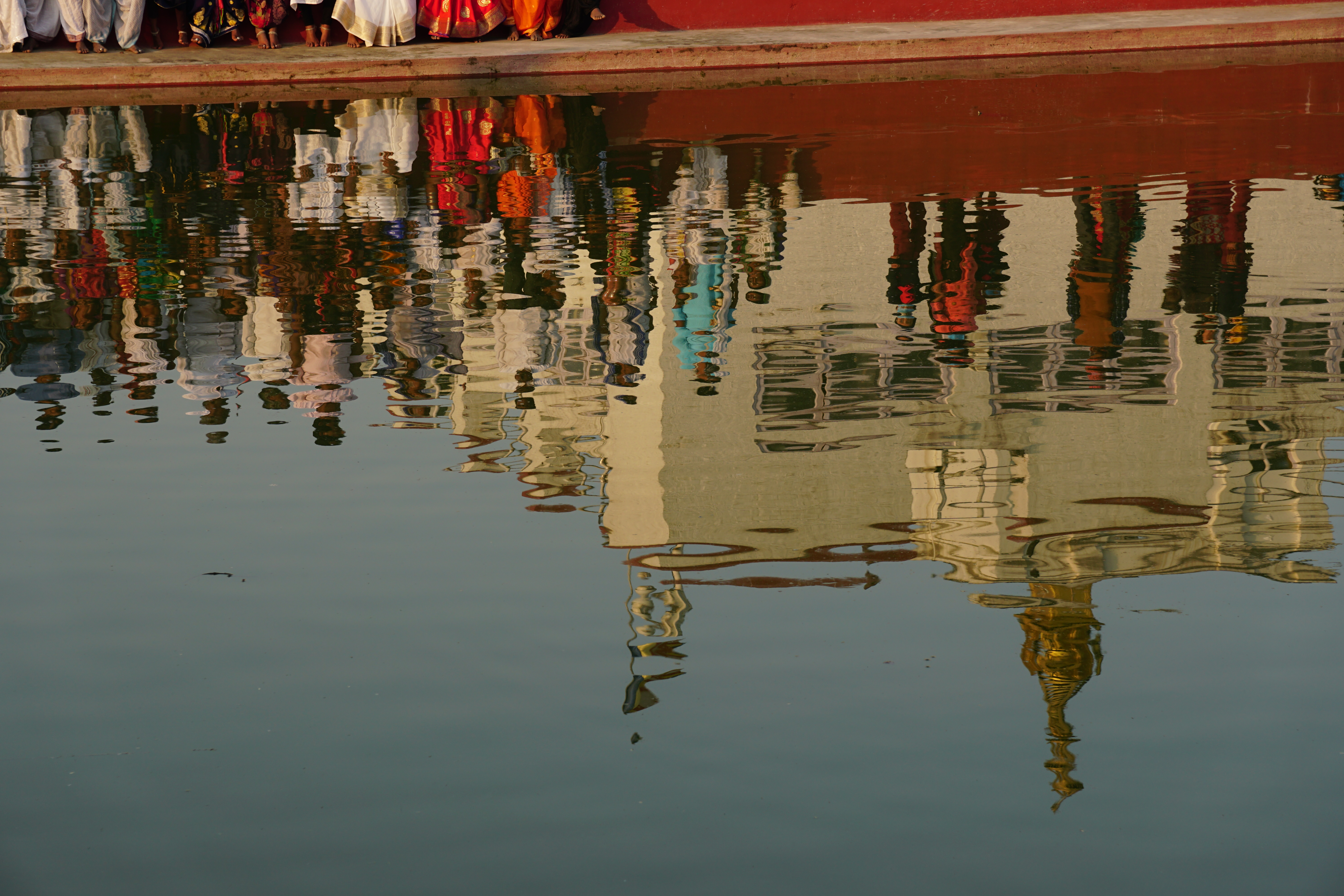
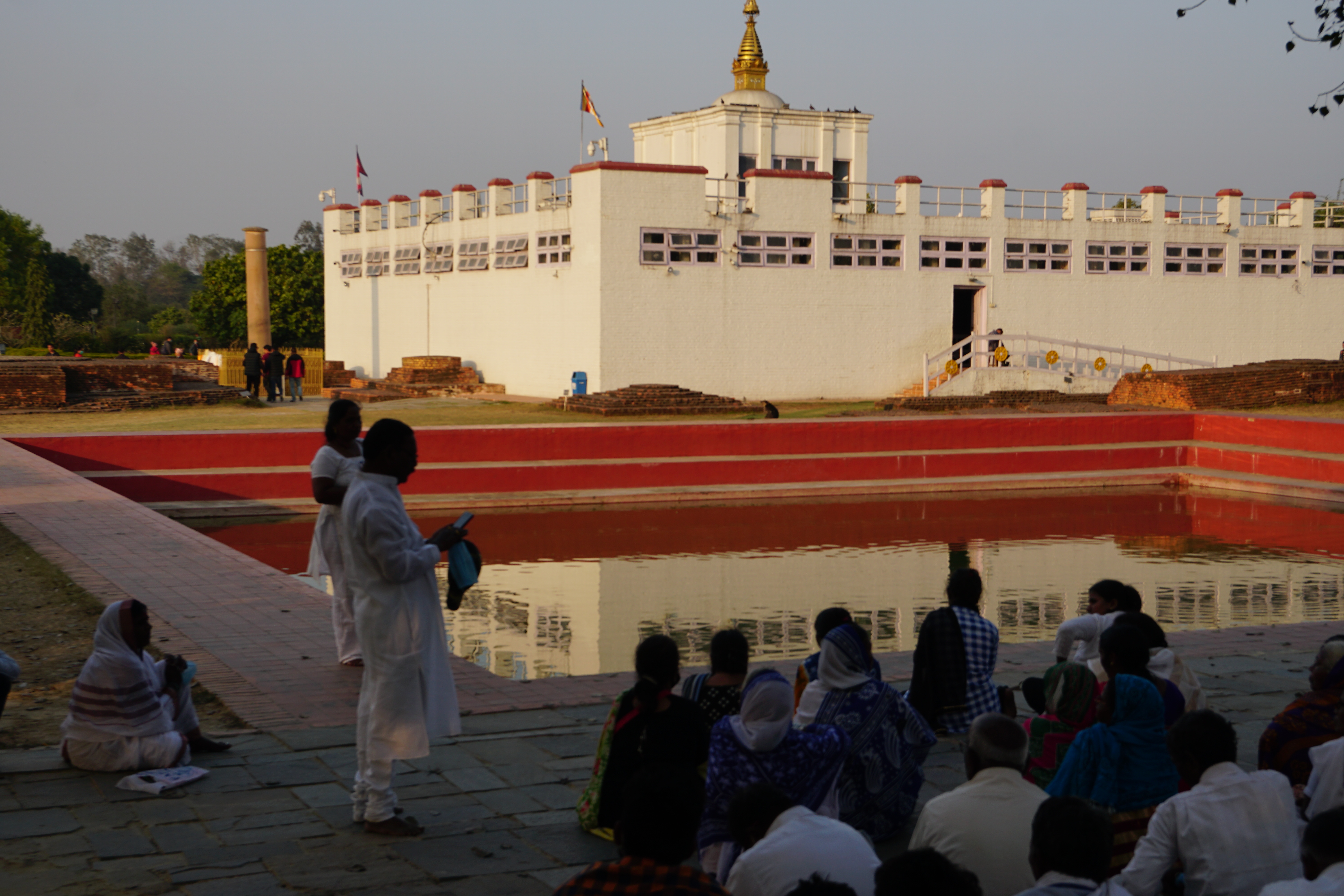
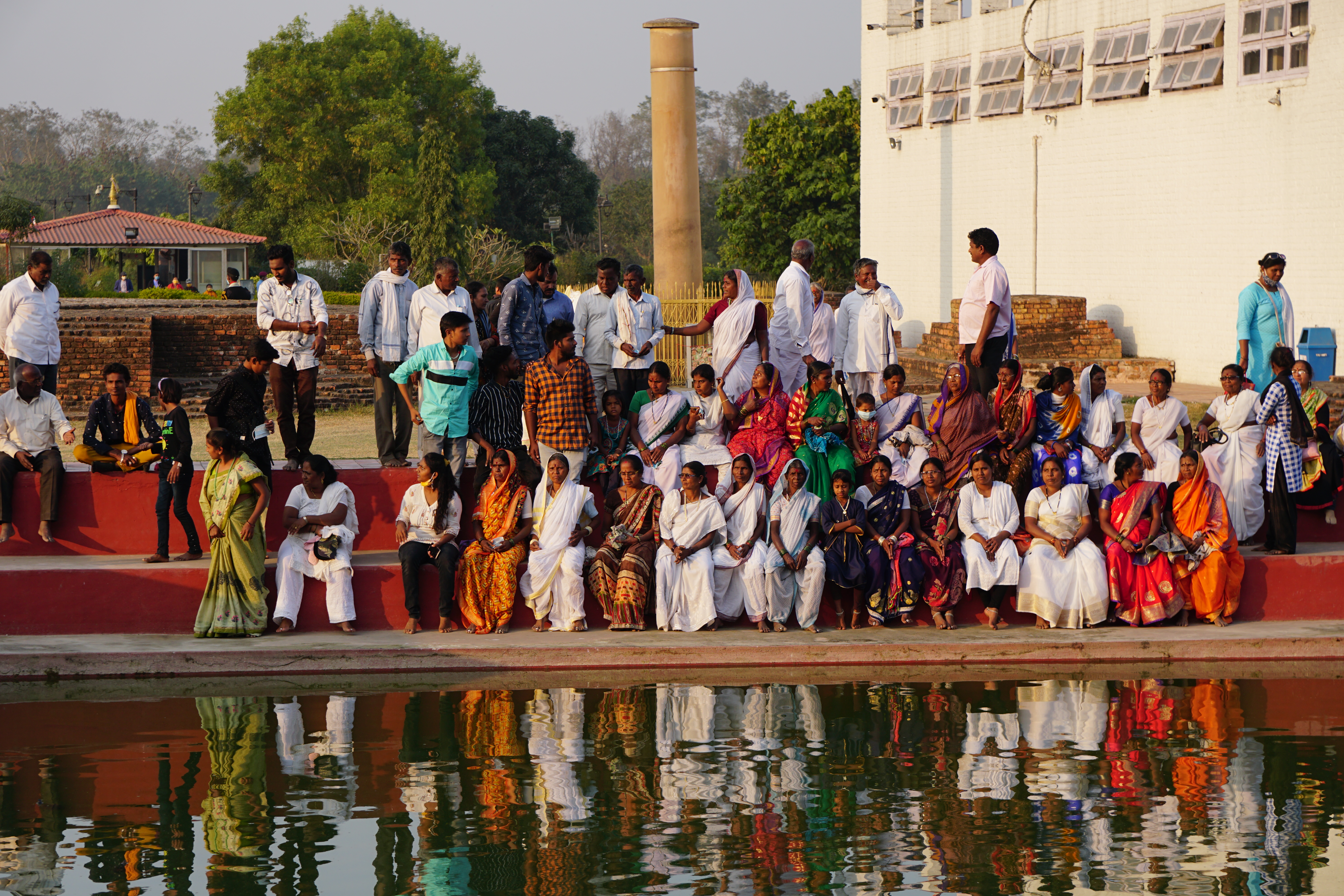
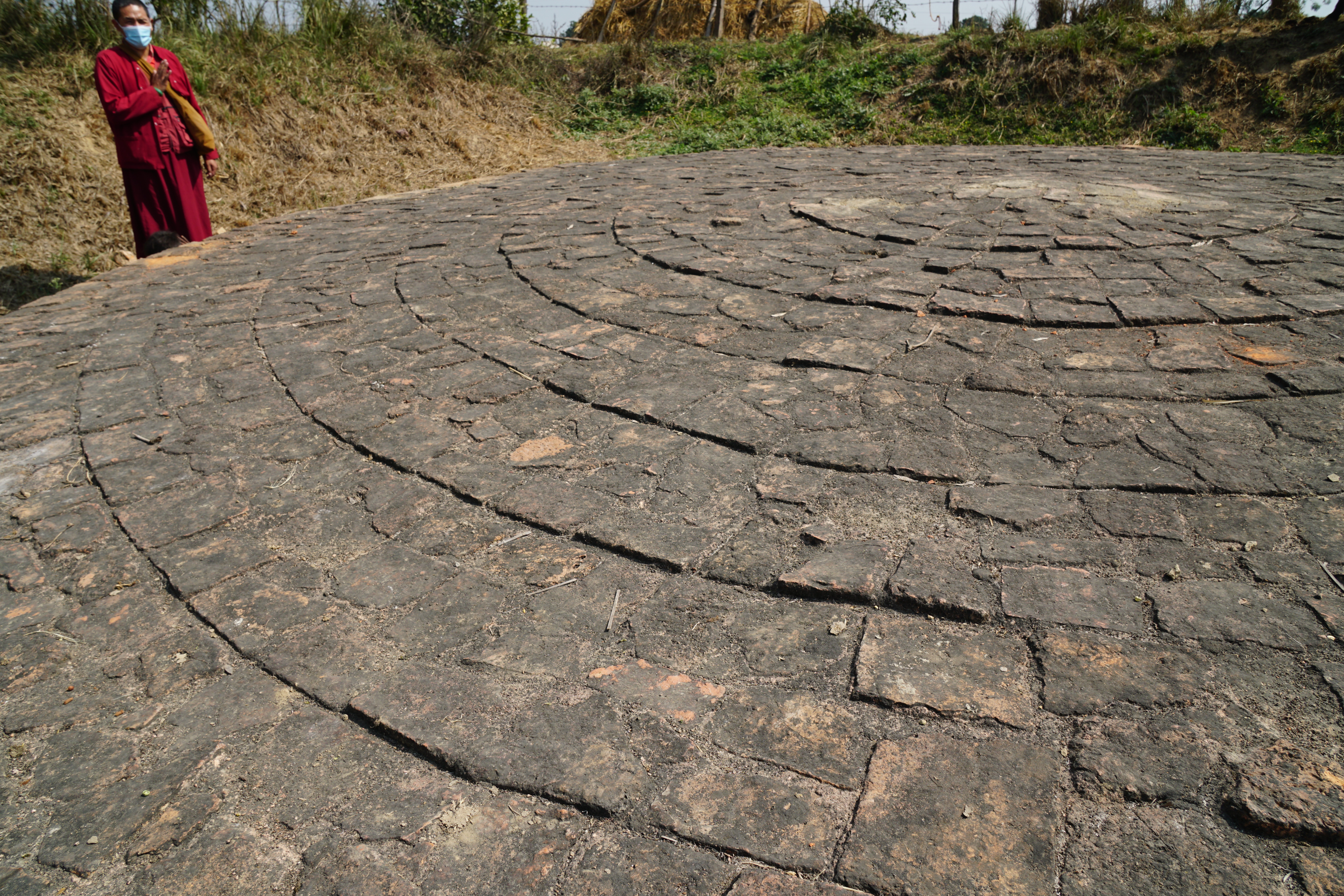
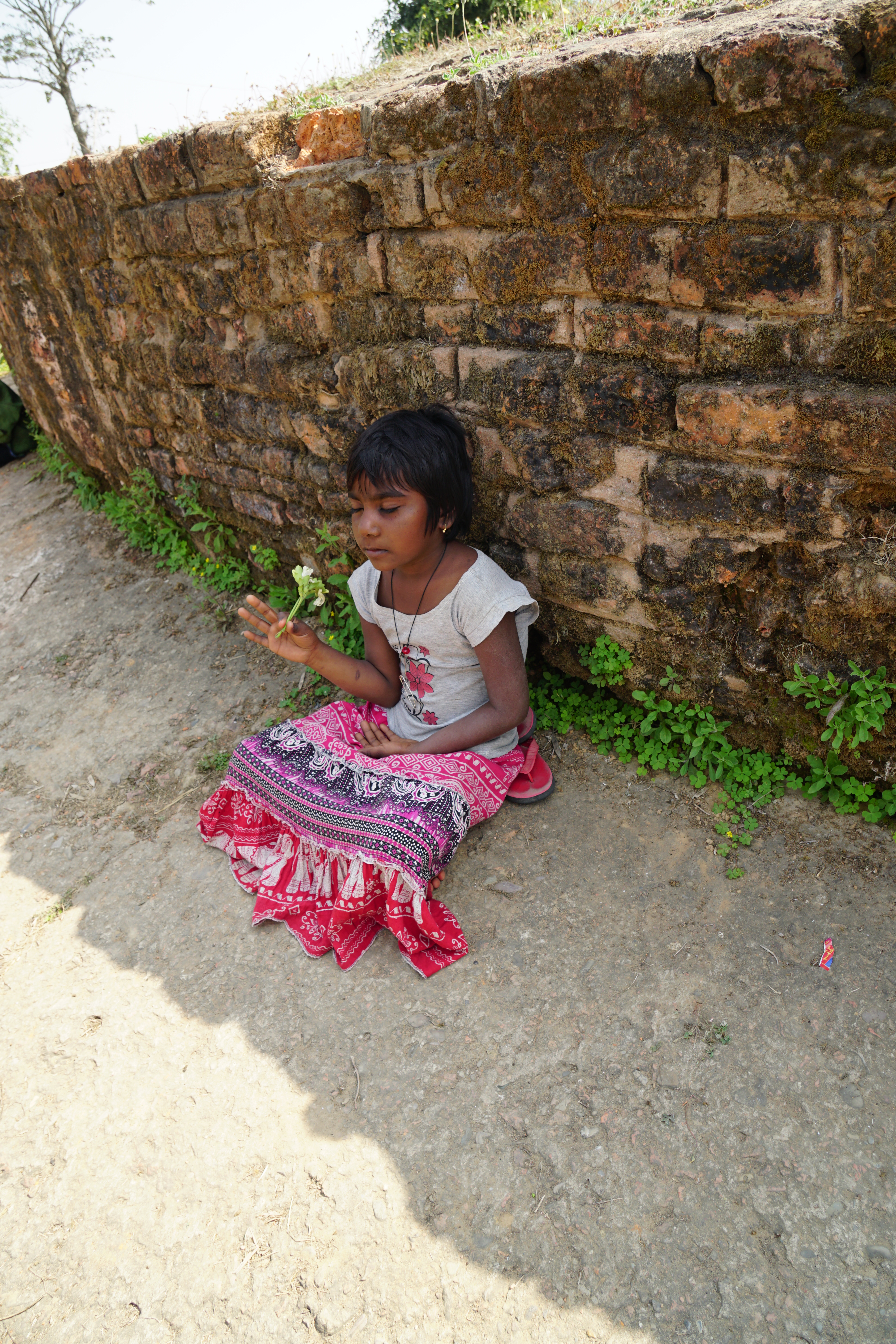
To think that in a rundown area of mud huts and struggling farmers there was once an empire of wealthy kings, for millennia, the first three Buddhas and then the historical Buddha of 2500 years ago were born near here.
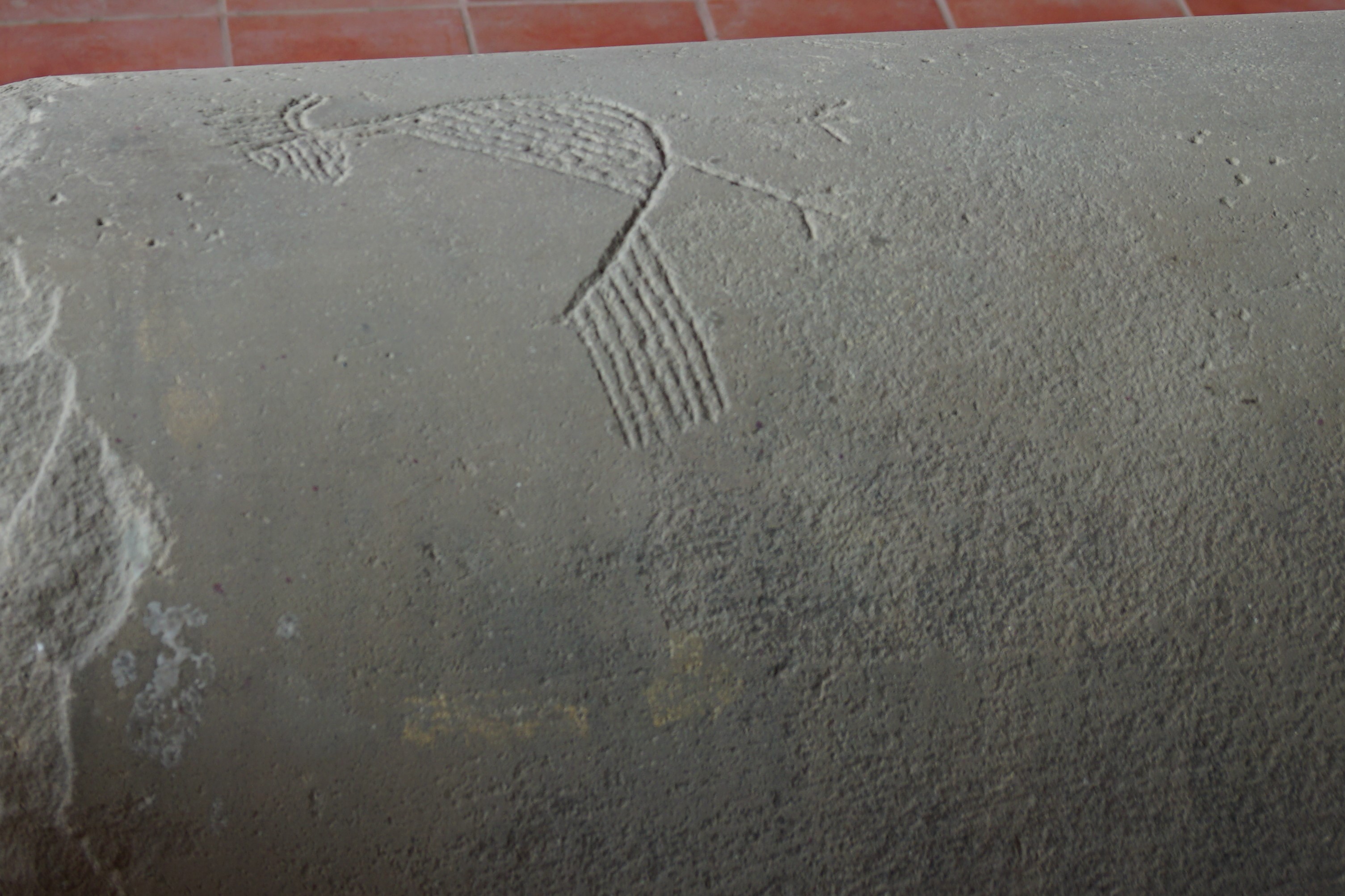
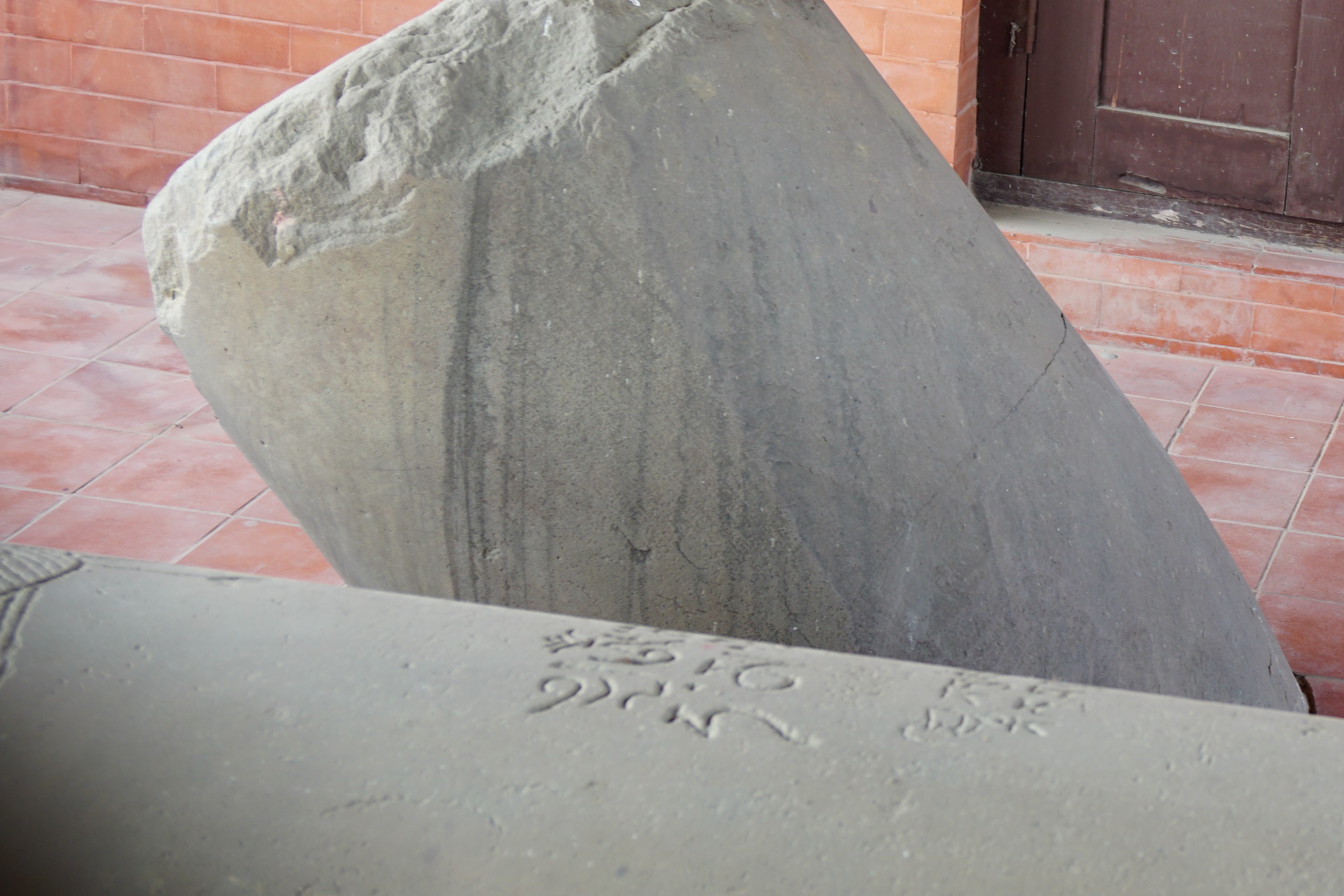
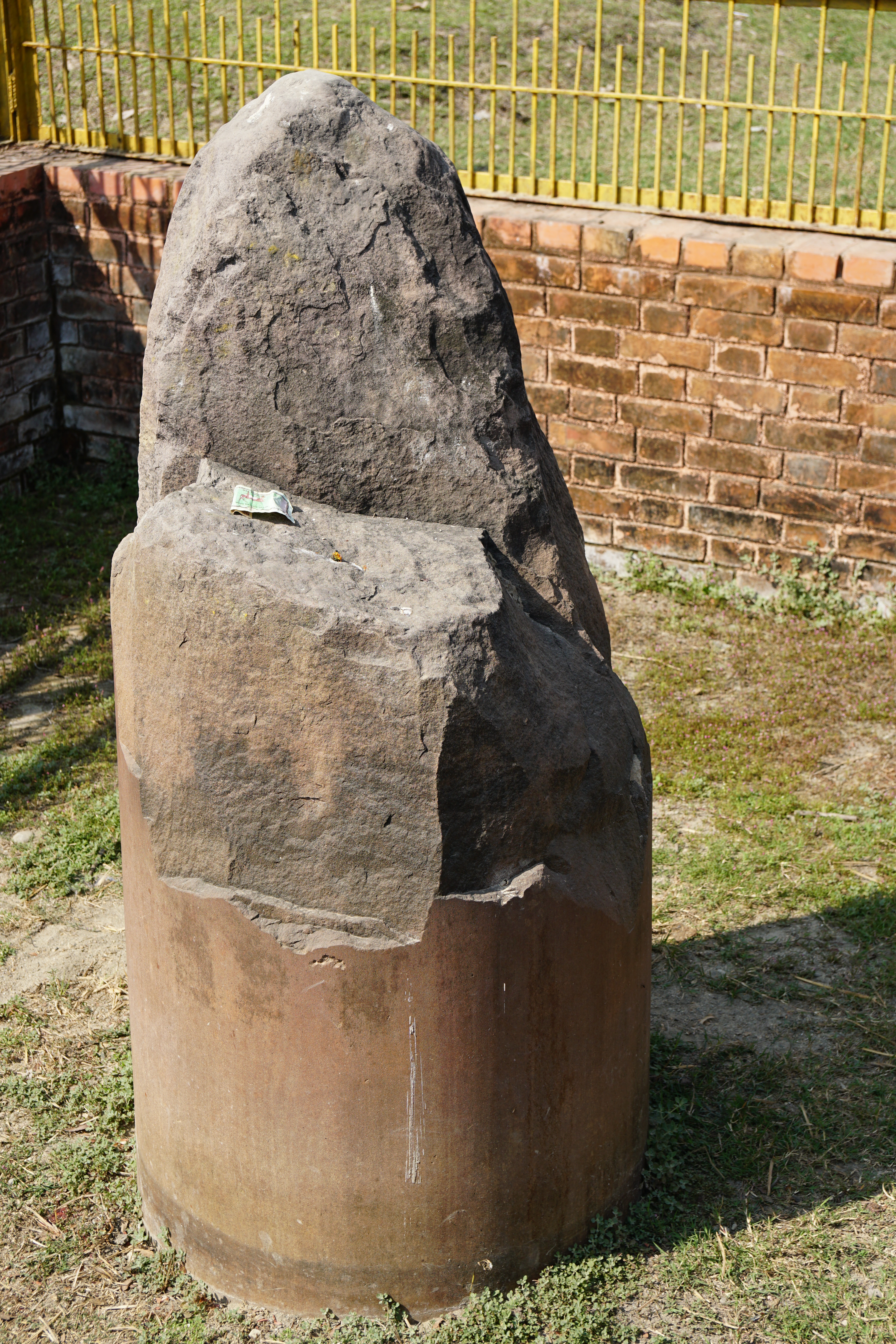
These were civilizations that could mill a massive stone pillar to such a smooth even surface. These pillars commemorate the births of ordinary humans who came to live in an enlightened state to inspire others. Here were born individuals whose teachings could change the world, here in these districts of rundown roads, houses, and families in mud huts.
Here was a time and a place and a young man who turned his back on the princely comfort of his life to find a way to seek a more universal truth. That we will all go old if we are lucky, we all will suffer and we all will die.
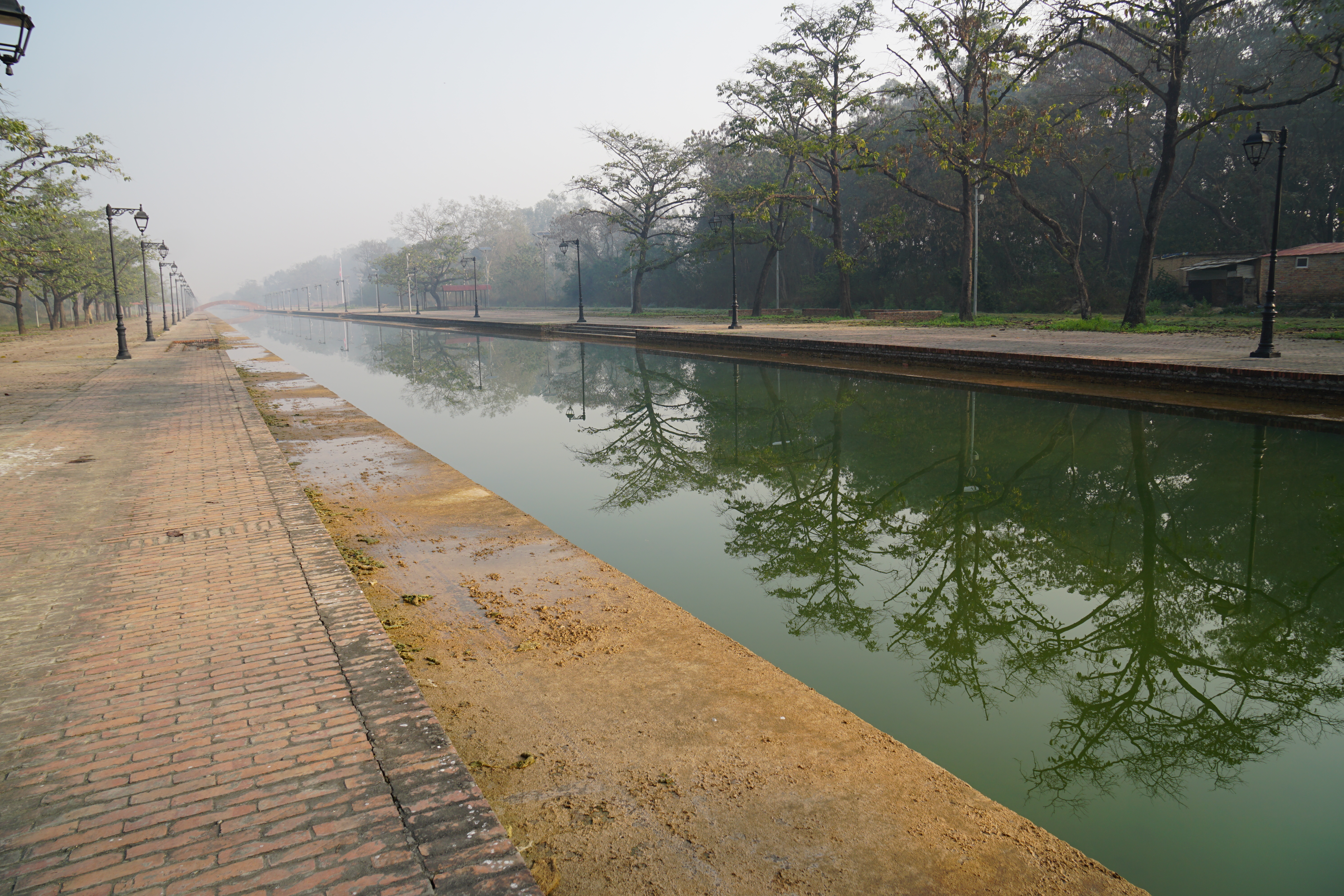
In the Kapilvastu ruins is the west gate from where he departed the palace and princely comfort. Now it is ruins of walls in the dust. A big tree and then acres of ruins. I wonder what conditions the ordinary people lived in.
Were they in mud huts or brick houses? What was the society where he lived and the way of life for the ordinary person?
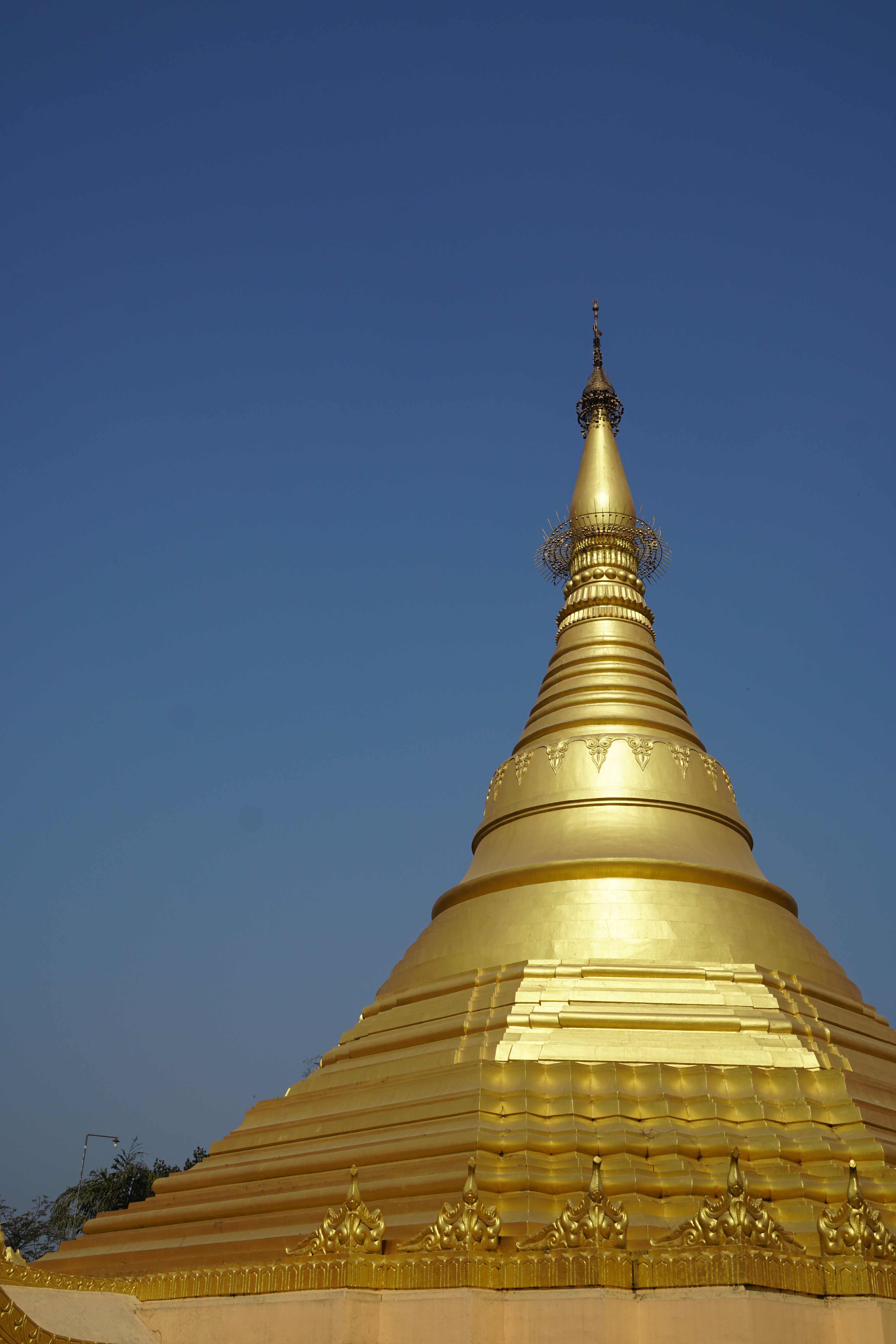
Lumbini is now a place so sacred to Buddhists from so many countries that have built temples here.
Copyright on all photographs (c)Frances Klatzel 2022
Living in Nepal for several years, you sort of get used to the little tremors… you get jolted awake in the middle of the night, or your desk does a quick shake.
My first earthquake was in the monastery kitchen at Tengboche when the tea ladles hanging on the wall began to sway. It was confusing – just a mild sense of motion – but the two Buddhist lamas sat calmly.
The first sense of the 2015 earthquake might have been ten days before when we were planning a work field trip to the mountains in Manang. We knew that the road was bad with ice and snow left over from the winter… but I had this ominous feeling.
I was able to change the field schedule to do a shorter trip first and arrive back in Kathmandu on the Thursday before… but having no idea of what would happen on Saturday. Otherwise, on the originally planned date we would have been driving on a road across several cliffs at the time of the earthquake only 50 kms from the epicentre.
It was a muggy but chilled out late morning waiting for a friend to have coffee.
The main earthquake started as several little quakes that kept building in intensity over five minutes that felt like fifty.
That afternoon as I knelt under a table and the shakes grew and grew, it was as if there was no past and no future. It was as if I was totally in the ‘now, the present moment.’
That moment of being alive but connected to all those experiencing the horrendous destruction and death happening with each shake.
The power of the quakes… 7.9, 6.9, 7.3 brought huge devastation to some districts of central Nepal. Old style houses made of rocks and mortar collapsed killing about 9,000 people.
Over the next 48 hours especially, the ground kept on moving. We later counted on the government seismic website that there had been 108 aftershocks in 48 hours that were over 4 in magnitude, earthquakes in their own right if it had not been for the big one.
The weeks and months that followed were filled with the immediacy of connecting people and places and groups… always in the moment.
The frequent aftershocks drove a very tangible fear of being in the wrong place at the wrong moment.
It was a very moving to see people come together, to see how young people organised to help those in need. Helped me to sense our common humanity and the importance of helping others. A very tangible response to the tangible fear.
As fear engulfs the world right now I think of the moments of fear I’ve experienced in my lifetime – usually tangible fears felt or seen, unlike this almost intangible virus bringing the world to a stop. I think of people with whom I’ve shared those moments and of another being with whom I shared fear of each other.
I was just a bold twenty-something backpacking when I carelessly stepped into a very dangerous and fear provoking experience.
The mother bear and her cubs had left footprints in all the muddy patches along the trail. From the size, we knew that she was a grizzly bear – large, solitary, and as a mother, defensive of her cubs. We knew that she was in the valley bottom so when the trail went up onto the mountainside to skirt a gorge, we assumed that we had left the bears behind. Precautions fell away and I let my longer legs take me ahead of my friend.
On the trail traversing the mountainside, I stepped into a clearing in the forest. A loud grunt shattered the stillness and down the slope, I saw a large brown animal. At first, I spread my arms not sure what it was… moose, bear. Then, two little bear cubs ran off into the forest. The mother stood on her hind legs. More snorting as she dropped to all fours and ran uphill towards me. She was about 30 feet away.
It was like a switch clicking on in the back of my mind with all the precautions that I’d ever learned first from my parents, hiking partners, and more experienced friends and official warnings.
Stand still.
Those moments as she came up leaping over the fallen log her paws slashing out sideways. Her gaze pierced me. I closed my eyes to break the glower between us, not knowing what would happen. As I opened my eyes, she was sideways having turned within 2 feet of me. Off she rushed after her cubs.
I realized that we had shared a moment of intense mutual fear, that she was perhaps more afraid of me than I was of her.
My feet shook so hard they bruised from hitting the sides of my boots. My thoughts raced to the friend behind me on the trail. She soon arrived and immediately asked what happened from the look on my face.
Those moments of fear replayed through the night as I tried to sleep. By dawn I came back to the realisation of the shared fear with the mother bear. She was defending her cubs and I have had intruded have on their peaceful feeding in the forest meadow.
My intangible fear of ‘what if’ had materialised as a tangible danger of sights and sounds and presence. The fear returned as ‘what ifs’ but in the moment of most danger my inner brain had taken control of my reactions. My mind was blank, still, my inner mind knew what to do.
Grizzly mother with young cubs of the year. Courtesy of and (c) Colleen Campbell 2001
A few lines from International Women’s Day in Nepal.
I’m seeing several images posted on social media with classic looking women pumping their biceps and lots of raving.
But, I am asking myself, is this what Women’s Day is really all about?
Is Women’s Day about using brute strength like some men (certainly not all)? Do we women really want to imitate men and how they do things?
Or is it really to celebrate the perseverance, equanimity, subtle strength, and love with which women go about their daily lives?
Do we really want to celebrate our masculine sides or strengthen our divine feminine? Bring that feminine power and way of doing things to a chaotic world?
Do we try to fight force with more force or try to return to more harmonious ways of being?
How do we create the conditions for women to be ensured of their rights to dignity and freedom from fear and servitude? Conditions so that women can voice their concerns and aspirations and have the agency to conduct their lives and livelihoods in a dignified and happy manner?
How do we ensure that some women never have to return to bonded labour (basically slaves) or en denture their children?
I hope that International Women’s Day also reminds women to follow their dreams and aspirations – whether to be a professional, climb a mountain, or raise happy and thoughtful children.
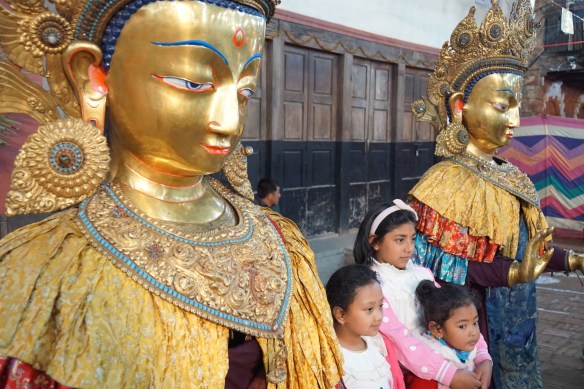
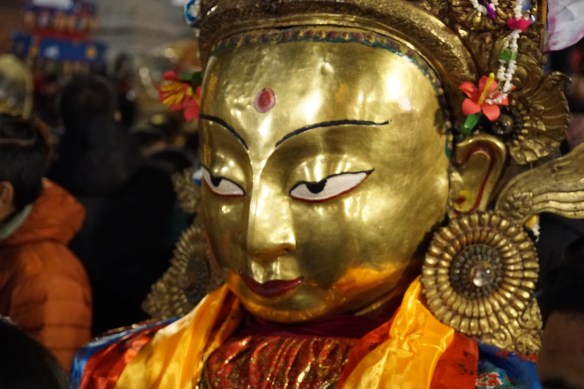
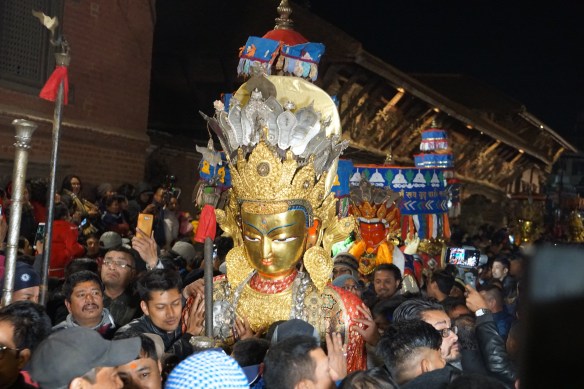
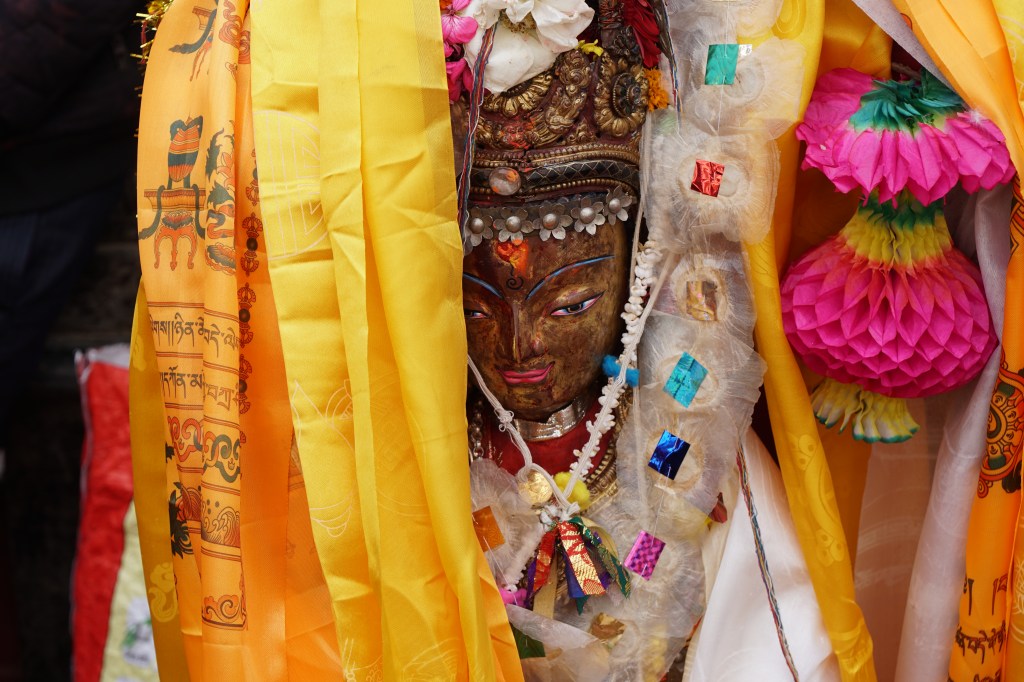
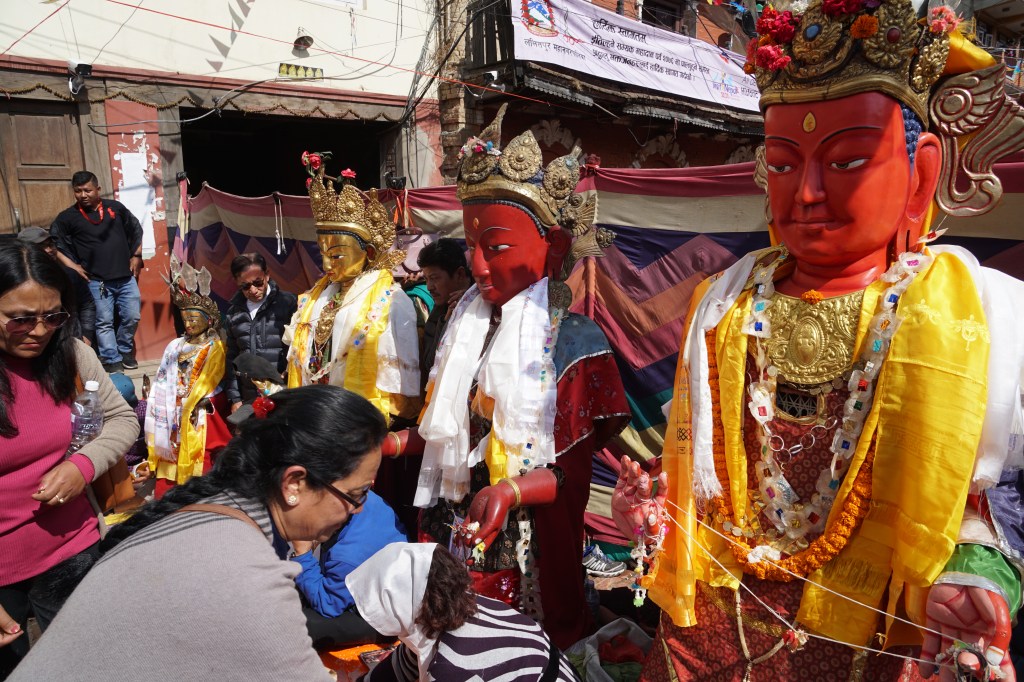
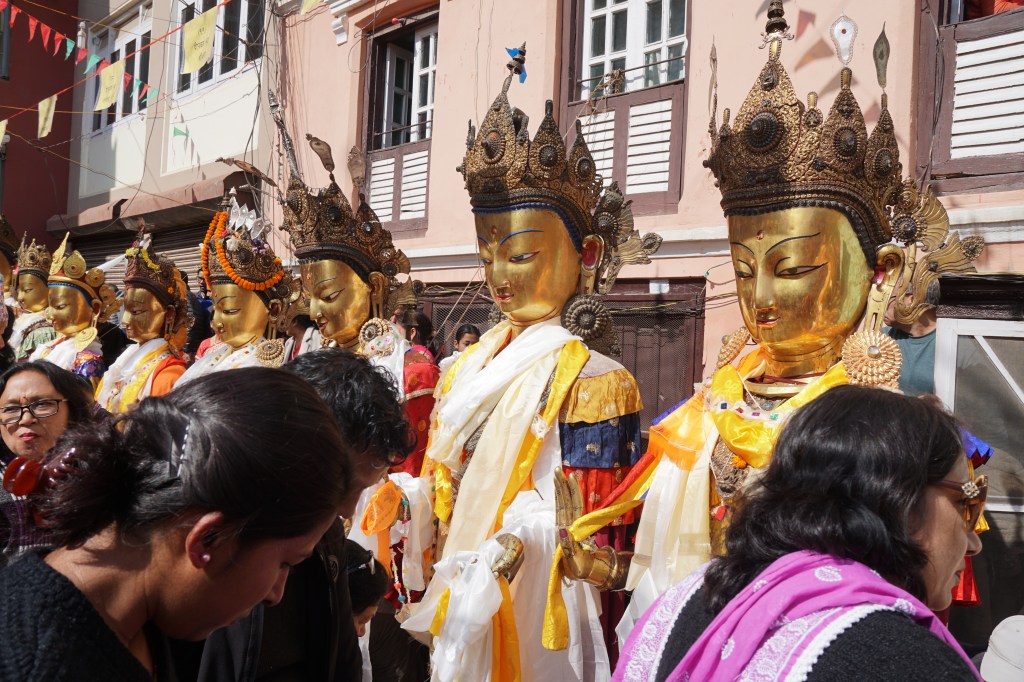
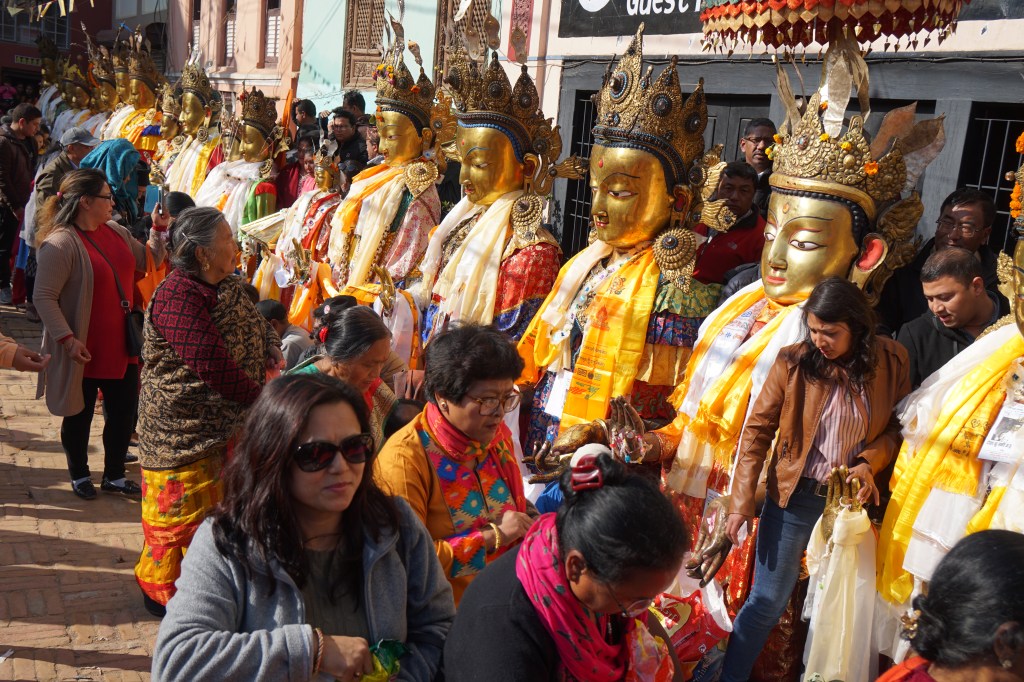
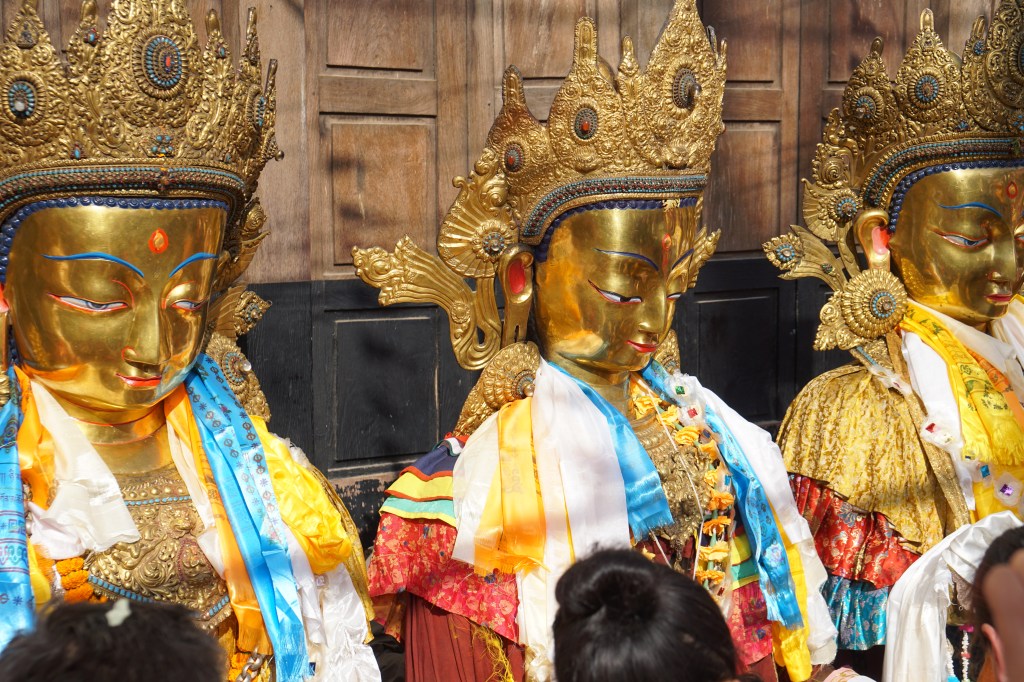
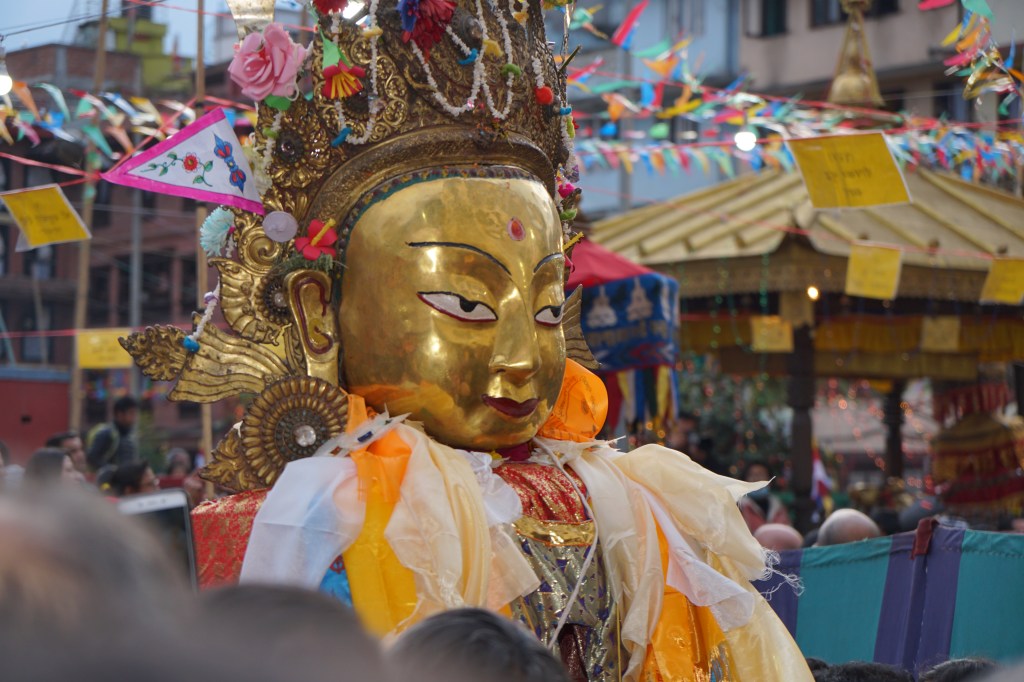
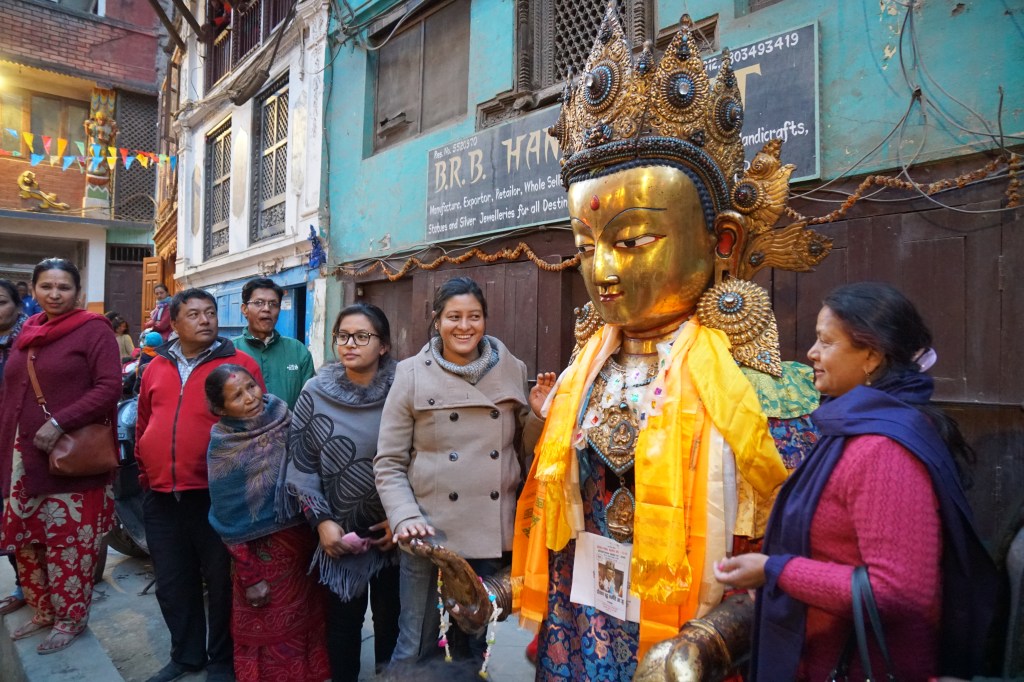
Again after four years, it is time for the Samayak when all the households with special Buddhist statues in Patan bring them to the big squares in the middle of the old city. The last Samayak was in 2016, just months after the earthquake. A couple of the temples damaged then have since been rebuilt.
First each household brings their ‘deity’ out to the front of their home on the street, where they offer prayers for the journey and gathering. The statues might be any size from six inches tall to huge heads over four feet tall that are worn by a man carrying them. Needless to say, many other family members help guide him on the journey through the streets.
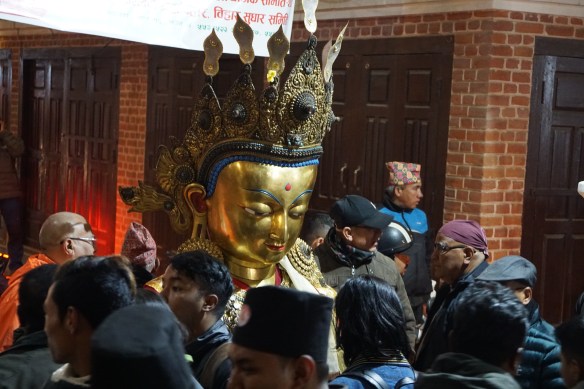
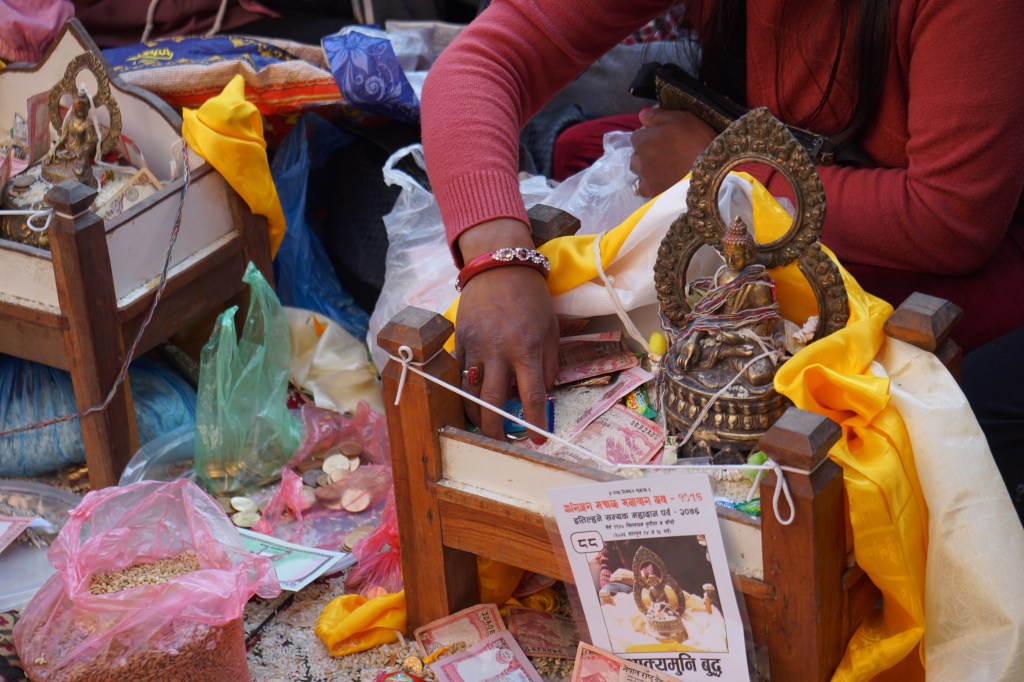
Then, the Buddhas assemble in Patan Durbar Square before moving over to the Nag Bahal Square where tens of thousands of people come the next day to offer their prayers and devotion. The queues to enter the the courtyard stretch for blocks along the nearby road.
Come twilight on the second day, after a procession by the elders of the community, the Buddhas head home with crowds lining the lanes and reaching out to touch the statues as they pass. After a brief rest outside the home or temple, the statues are returned to their secluded homes. Portions of the offerings are shared with community members sitting and waiting in rows
Revering by walking, prostrating, chanting, offering…
Offerings – of objects or one’s presence – affirms the Tibetan’s reverence of sacred places and objects.
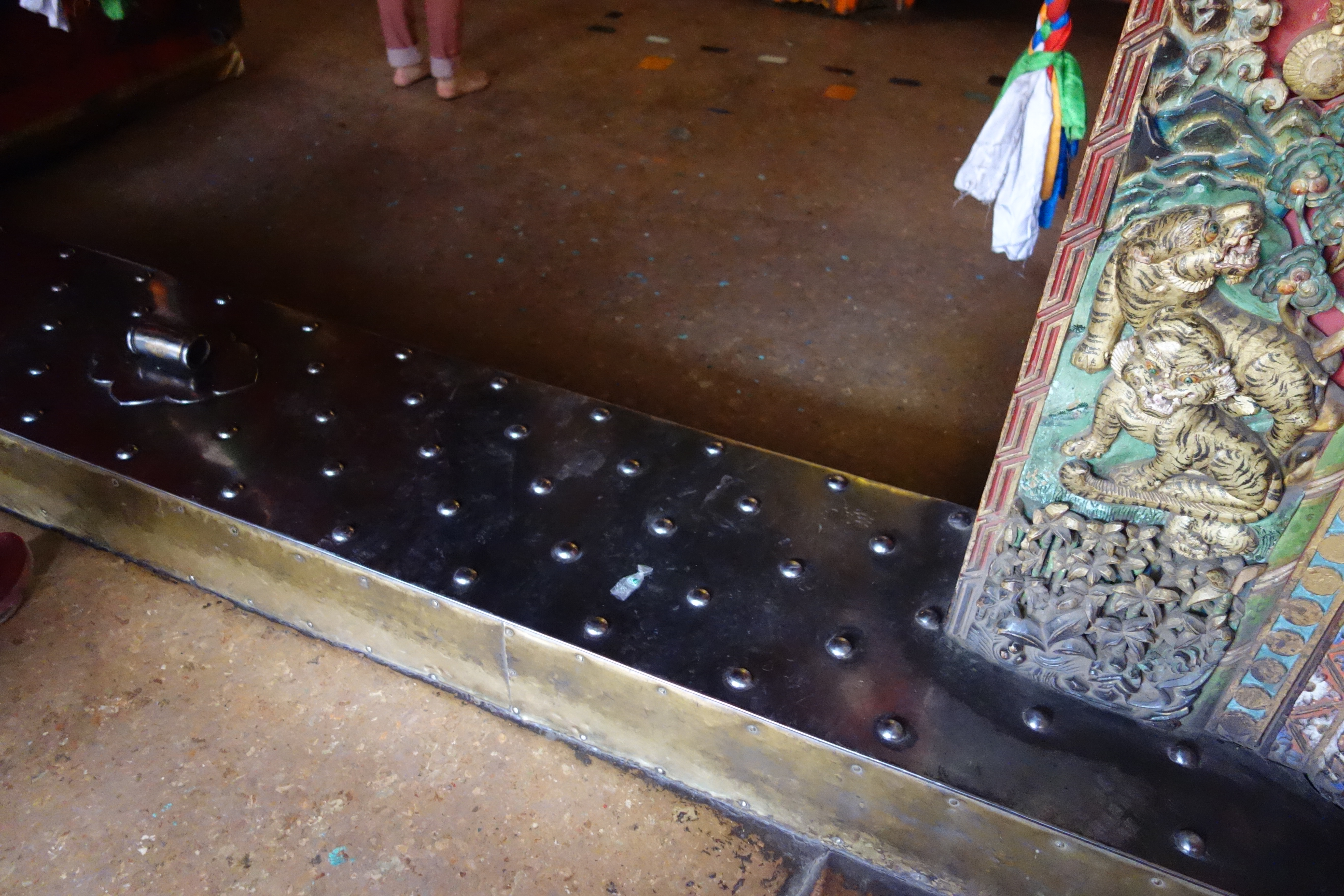
Thresholds can be the shift into a physical structure or rituals for new events in a lifetime. Thresholds are the crossing into another existence whether physical, emotional, or spiritual… or as in these sacred places, the combination of all three.
Jokhang – the heart of Tibetan pilgrimage
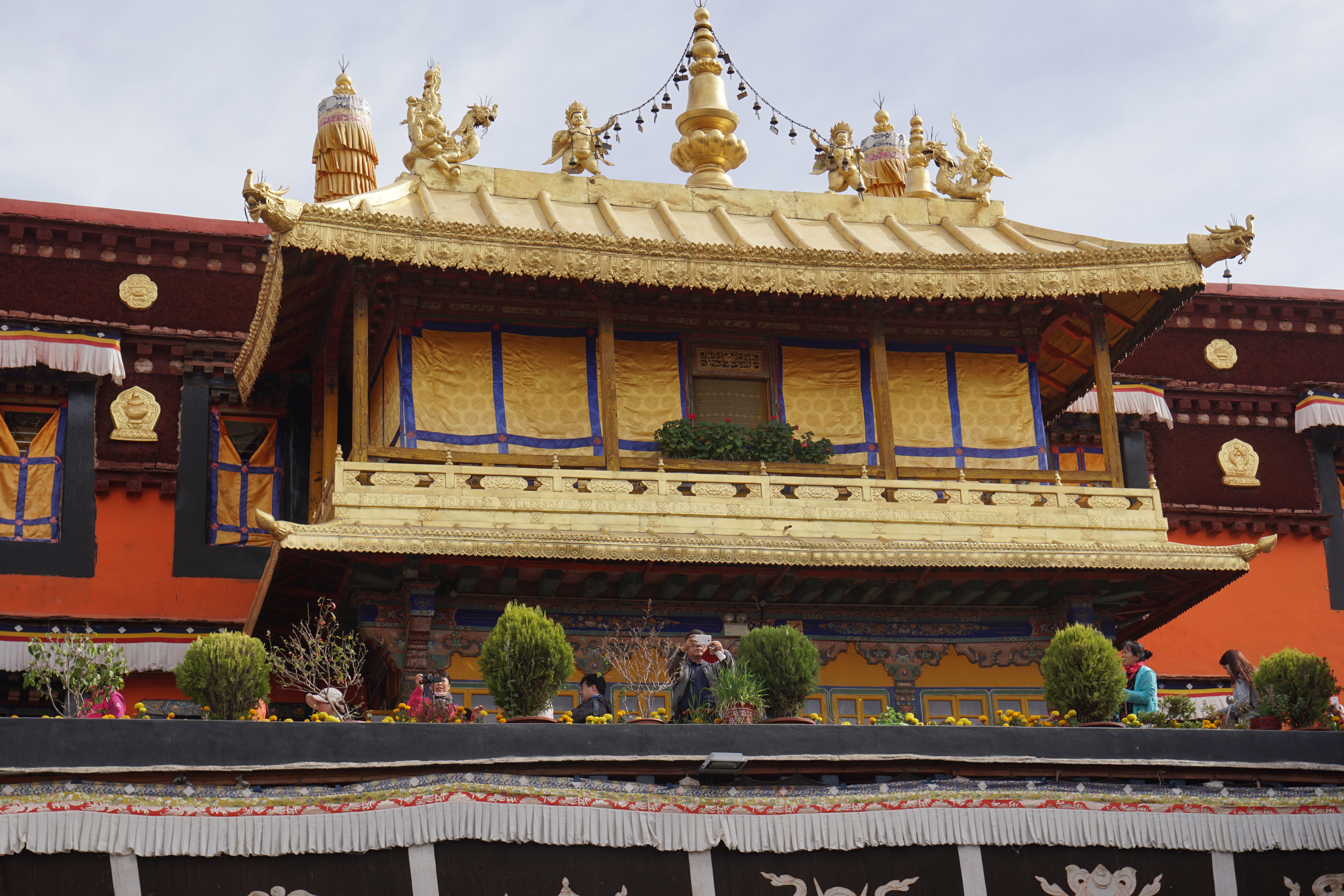
Tibetans think of the Jokhang as the “spiritual heart of Lhasa” and it does sit in the middle of the Barkhor, the market square of old Lhasa. More importantly, it is the most sacred and important temple in Tibet.
King Songtsen Gampo (traditionally the 33rd king of Tibet) began to build the temple in 652 AD to house the many Buddhist statues brought as dowry by his two brides: Princess Wencheng of the Chinese Tang dynasty and Princess Bhrikuti of Nepal, who both helped him establish Buddhism in Tibet. The most important statue is the Jowo, an image of the twelve-year-old Buddha. The Jokhang was enlarged many times and the scene of many important events in the establishment of Buddhism in Tibet.
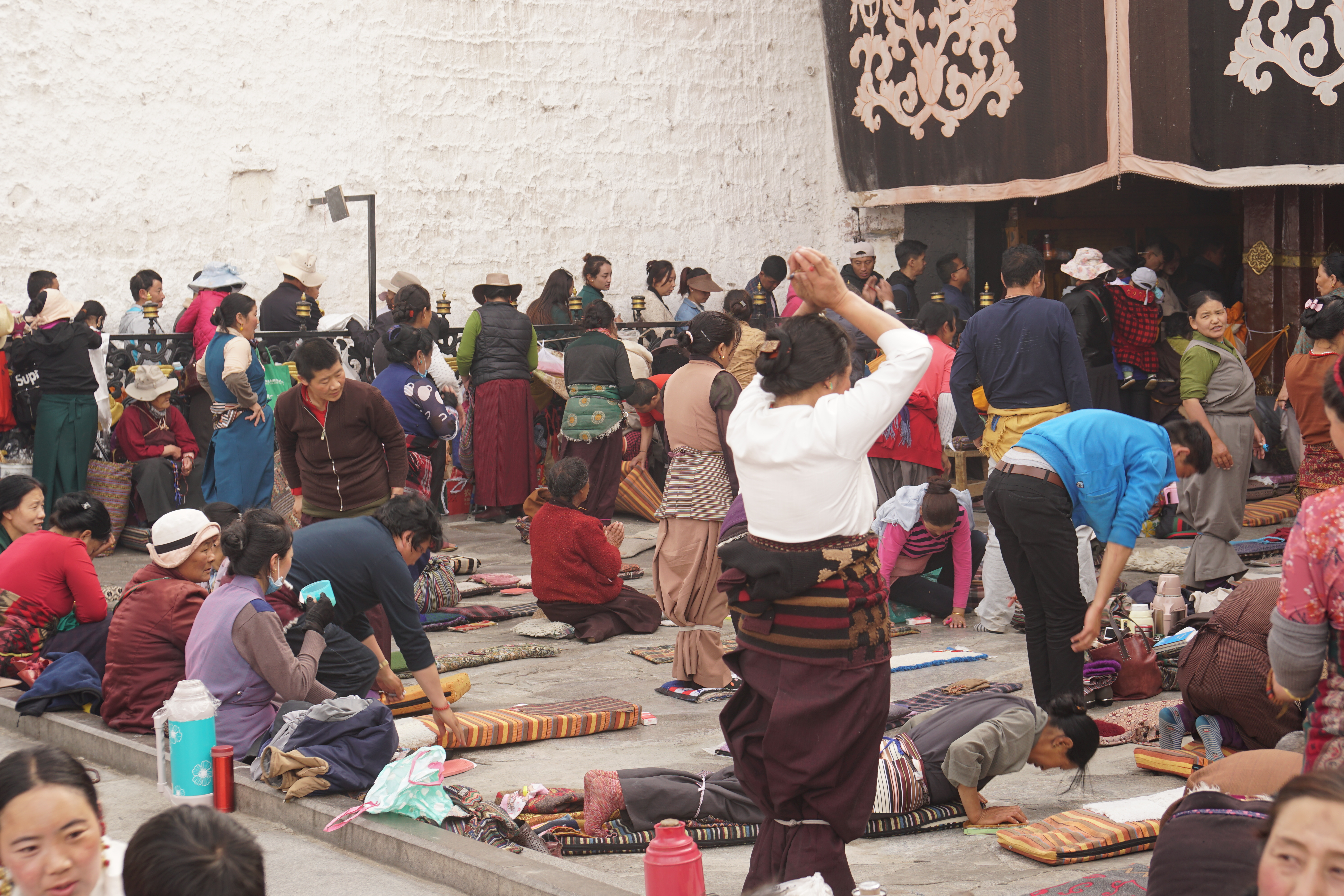
In the morning there were thousands of Tibetans in a long queue to visit the inside of the Jokhang while others did prostrations and circled this most important temple.
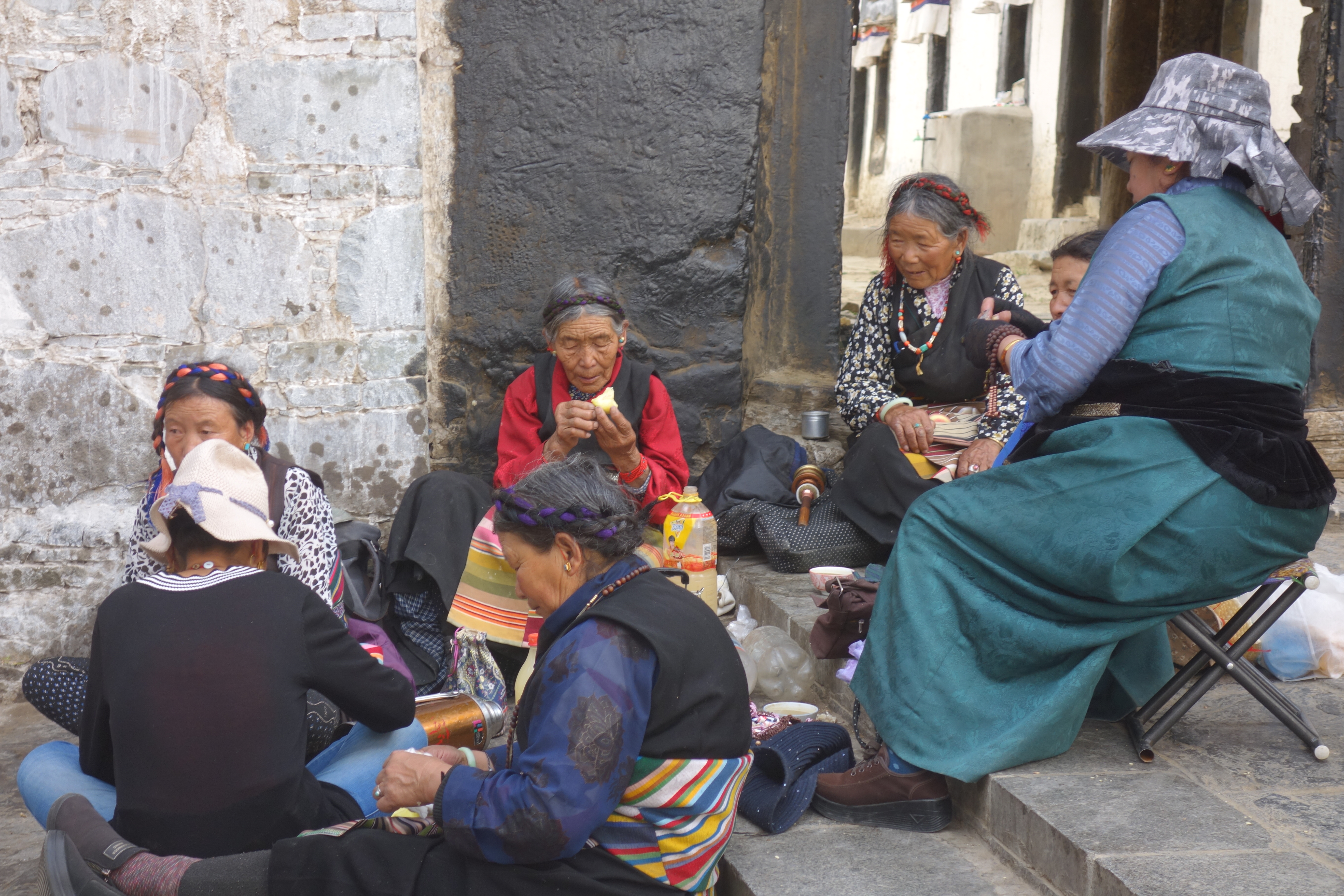
Spiritual and social… taking a break from prostrations
Starting young… her mom showed her how to do the prostrations
The police managing entry to the Jokhang let tourists in by another door without the long queue. Most of the other tourists were Chinese… everywhere we went.
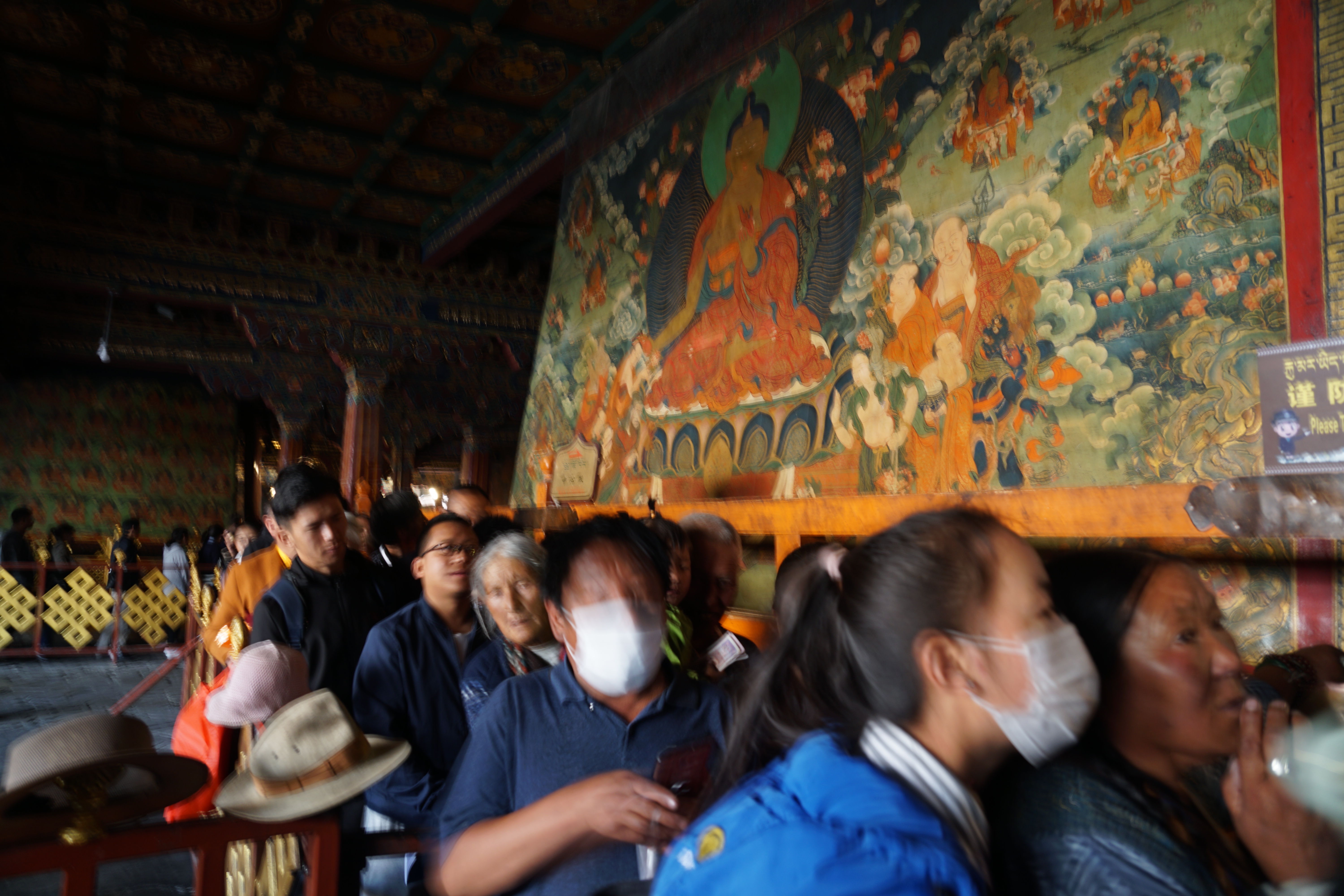
The queue was long but people were patient. Many people carried large thermoses full of melted butter to add to the huge butterlamps by the main Jowo statue.
The murals on the walls were fantastic, but no photos were allowed past this doorway.
This old carving on a stone block seemed old. Some of the temple is about 1,300 years old and some has been refurbished, like on the roof.
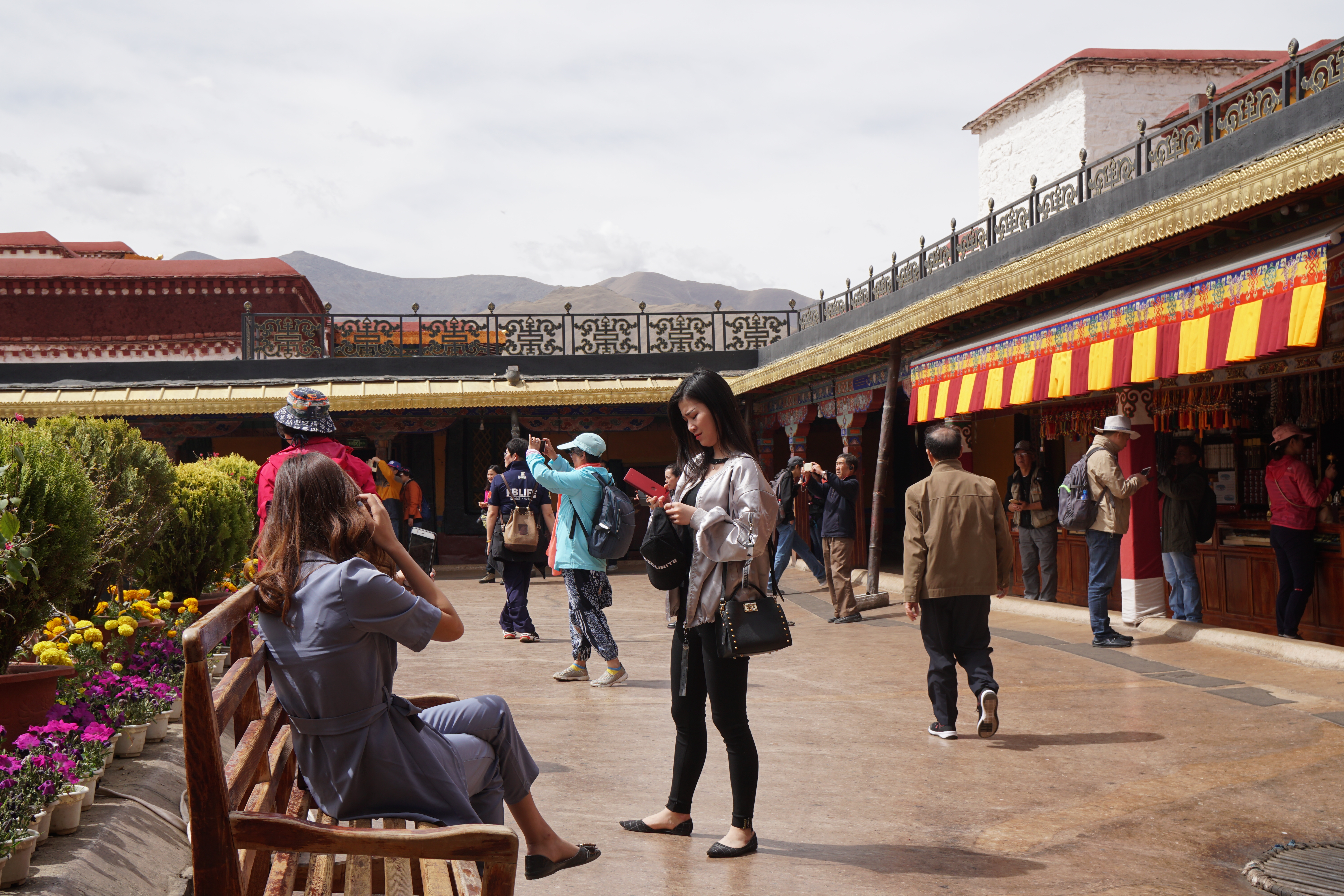
We could not see signs of the fire on Feb 17, the day after Losar this year. But, barriers and security guards limited how far we could wander on the rooftop.
Most tourists were Chinese. An elderly Tibetan man I knew from past visits said that recently published statistics on visitors to the Potala in the previous month were 34 Tibetans, 5,000 Chinese, and 17 foreigners. We did not visit the Potala on this trip. While I waited for the group, a young Chinese woman started talking to me here on the Jokhang roof. I asked her what attracted her to visit here… “pure, clean land and very faithful people” It seemed that she had not heard much else about what has happened in Tibet.
Shigatse and Tashilunpo
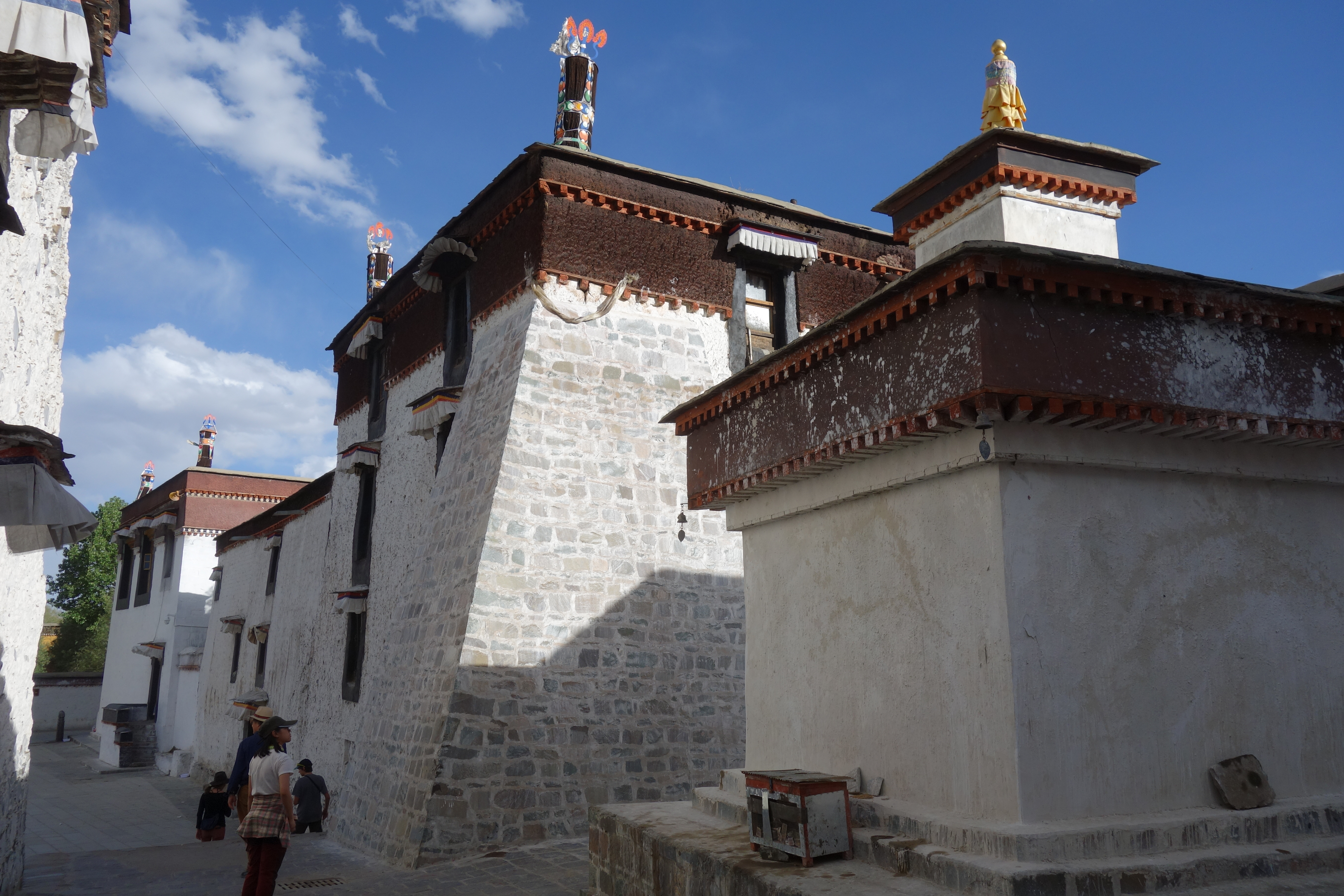
Tashilunpo is a relatively newer monastery in Shigastse to the west of Lhasa. It was founded in 1447 and sacked by the Gorkha Kingdom of Nepal in 1791. The Nepalis were eventually driven back almost to Kathmandu. The monastery once had over 4,000 monks but we could not find our how many are there now.
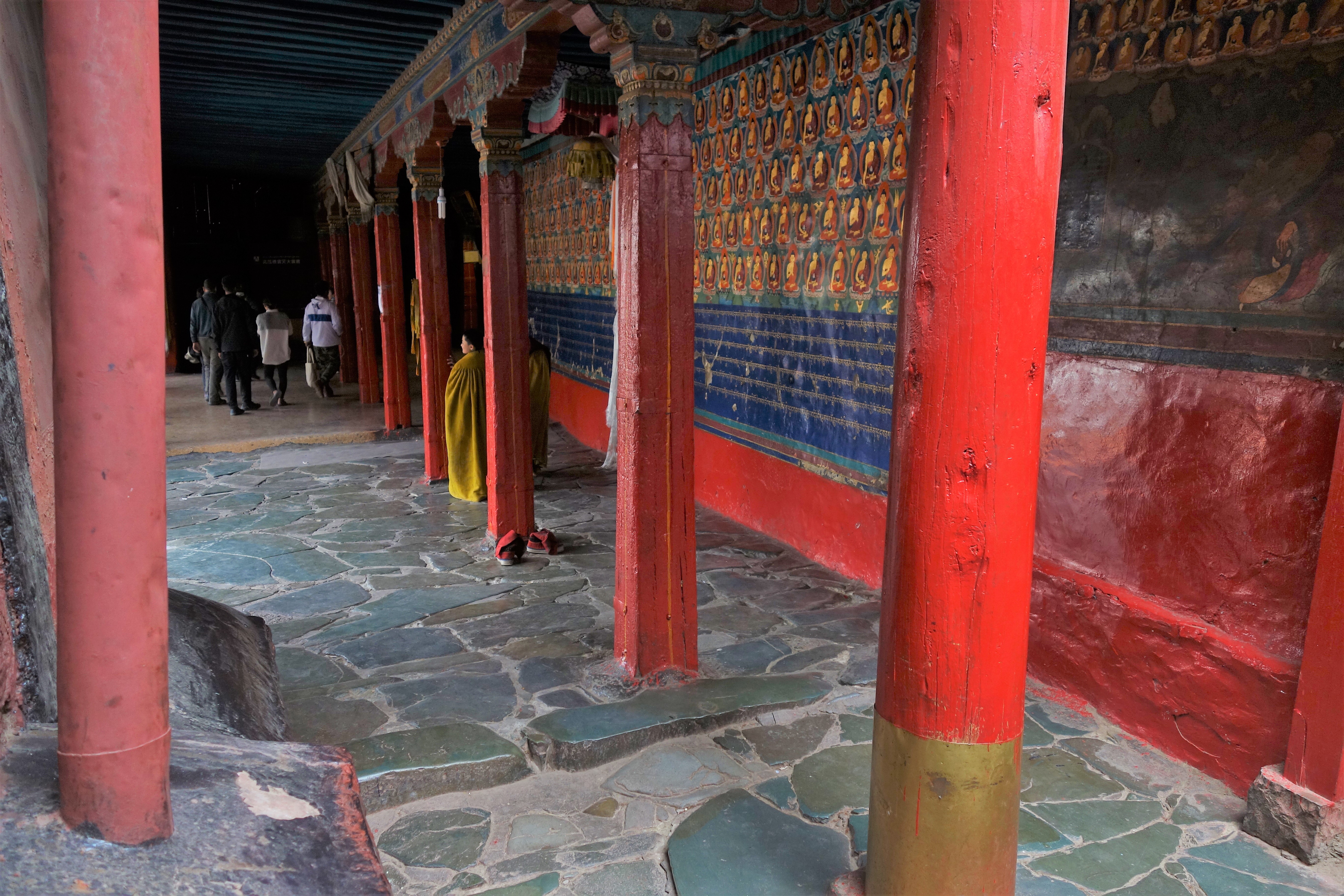
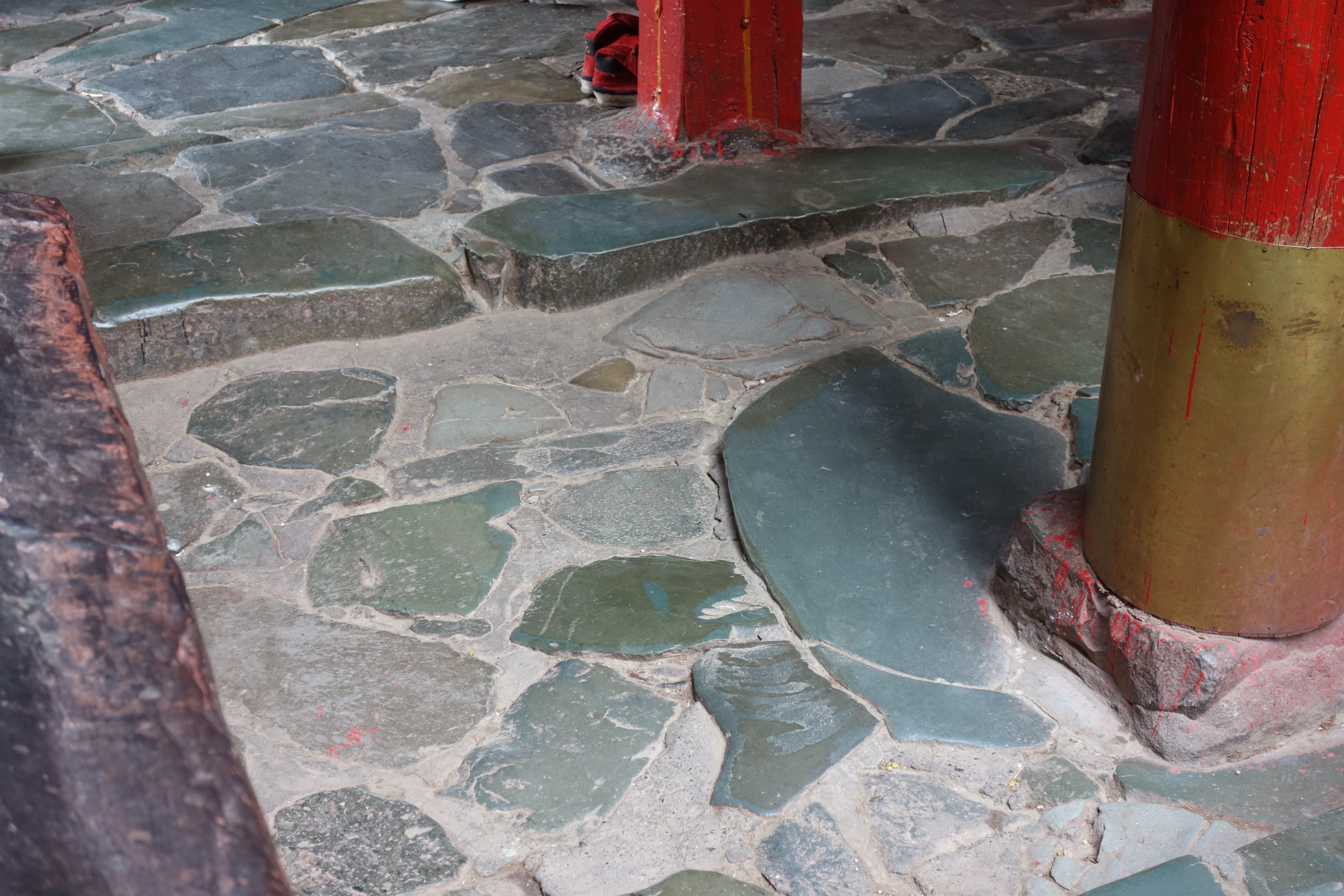
The worn flagstones… what history has passed over them.
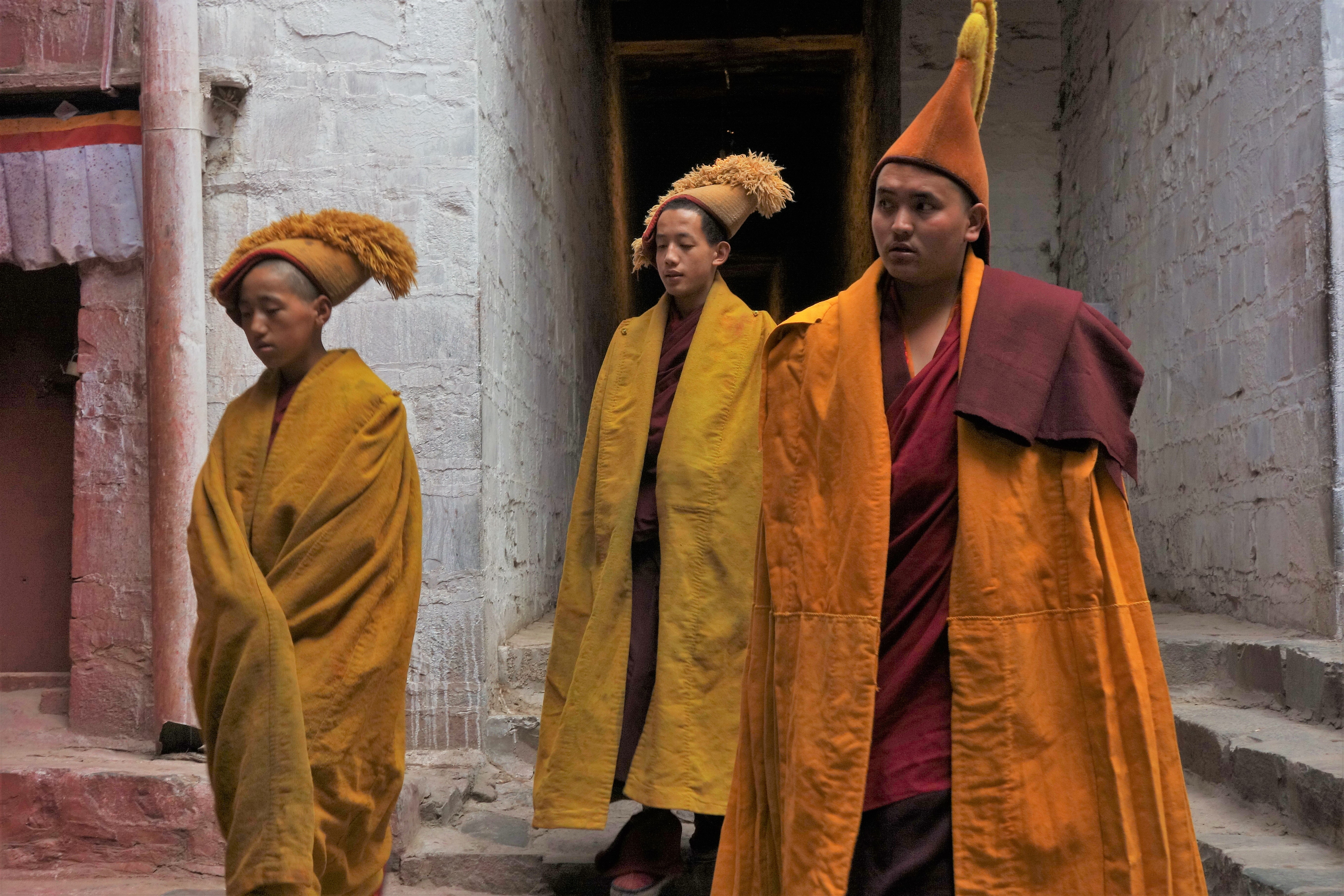
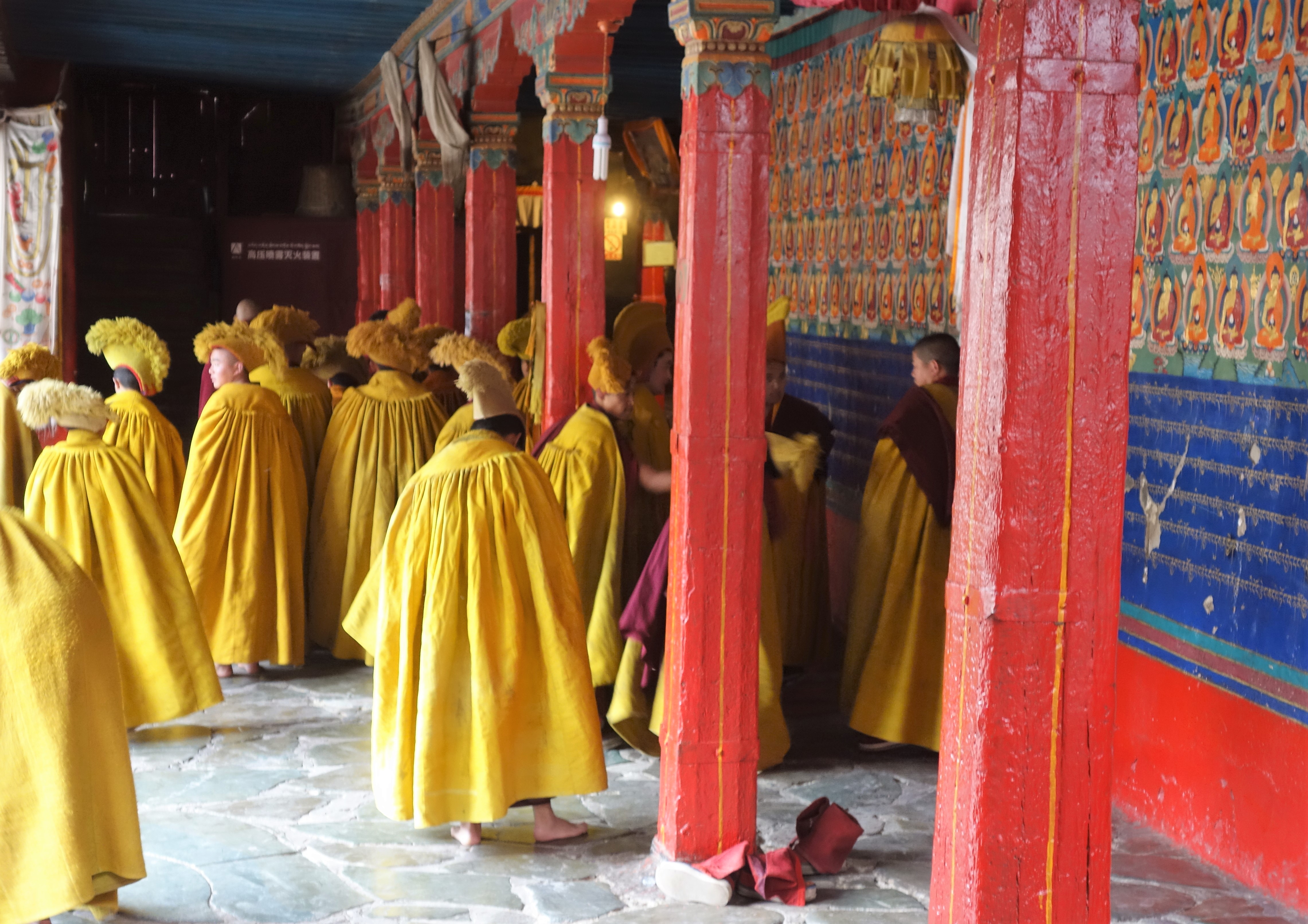
The monks gathering for evening prayers
The threshold into the main prayer hall.
Avalokiteshvara or Chenrezig in Tibetan embodies the infinite compassion of all the Buddhas and completely devoted to helping others until all being achieve liberation.
There are four main gompas (temples) in the monastery.
The representation of the spiritual character of a previous lama.
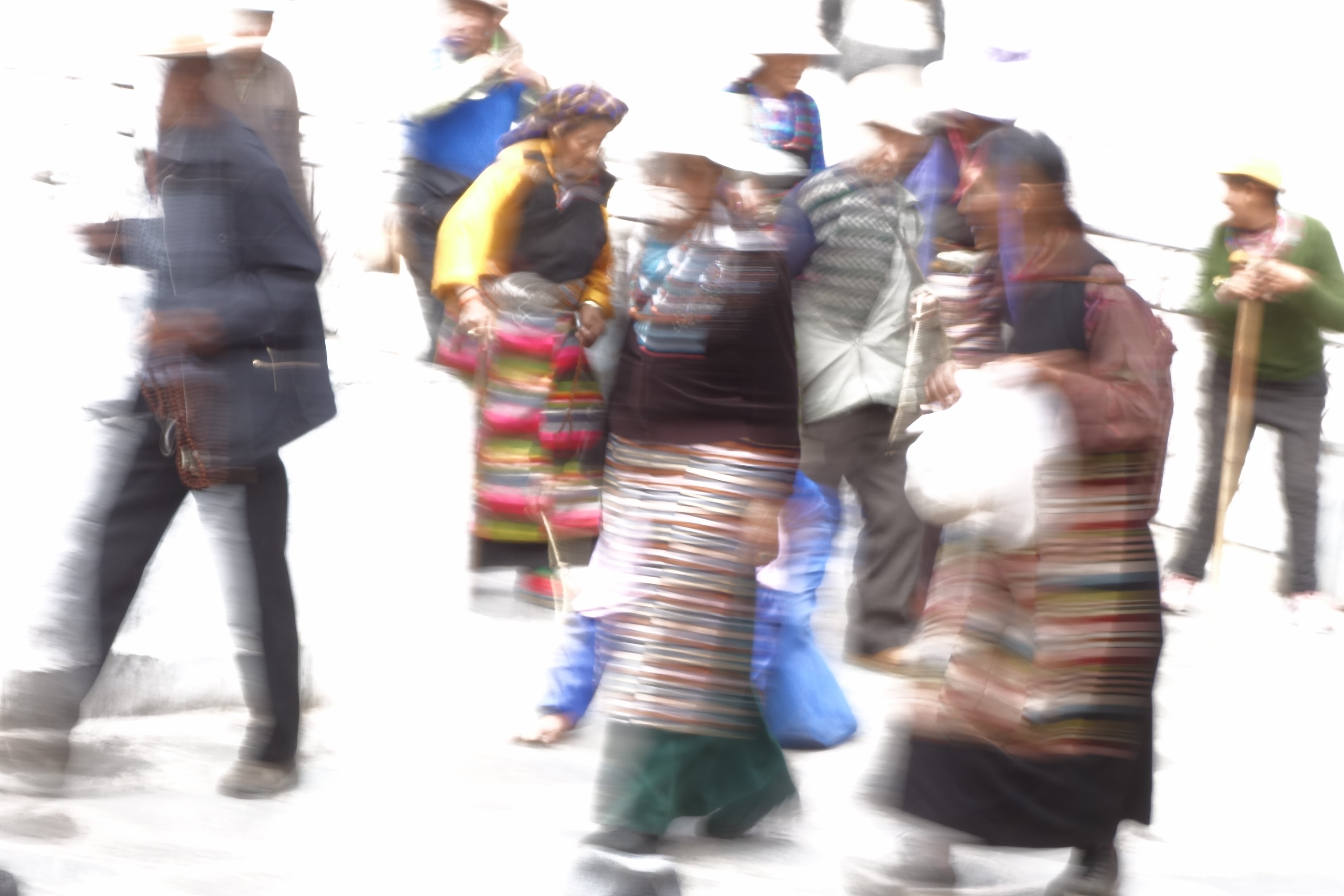
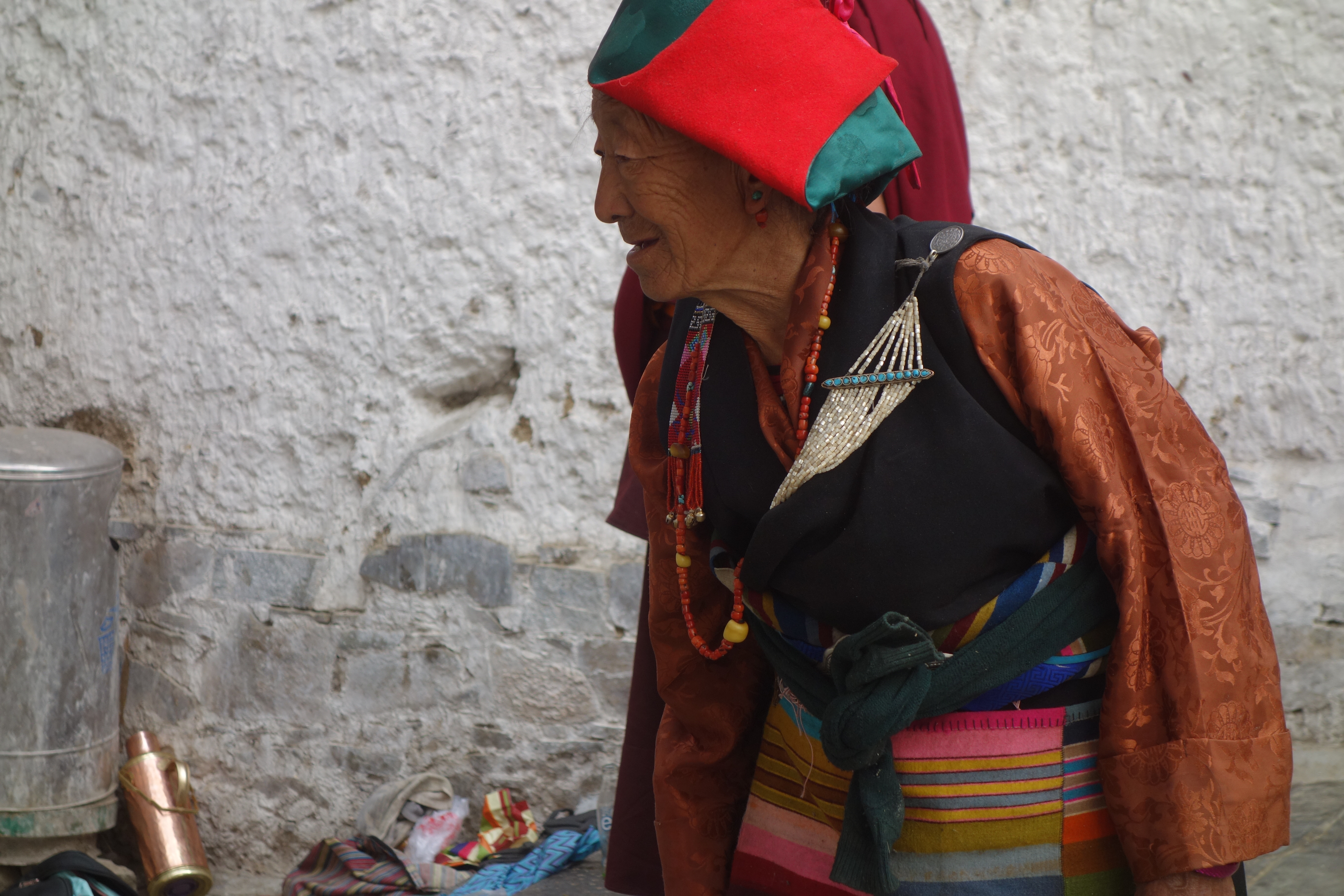
We were visiting in Saka Dawa, the sacred month commemorating the Buddha’s birth and enlightenment. Local people filled the area around the three stupas at Tashilungpo as they walked the kora, rested, ate, and visited.
The kora path was like a river of devotion.
Toddler sleeping on a bench.
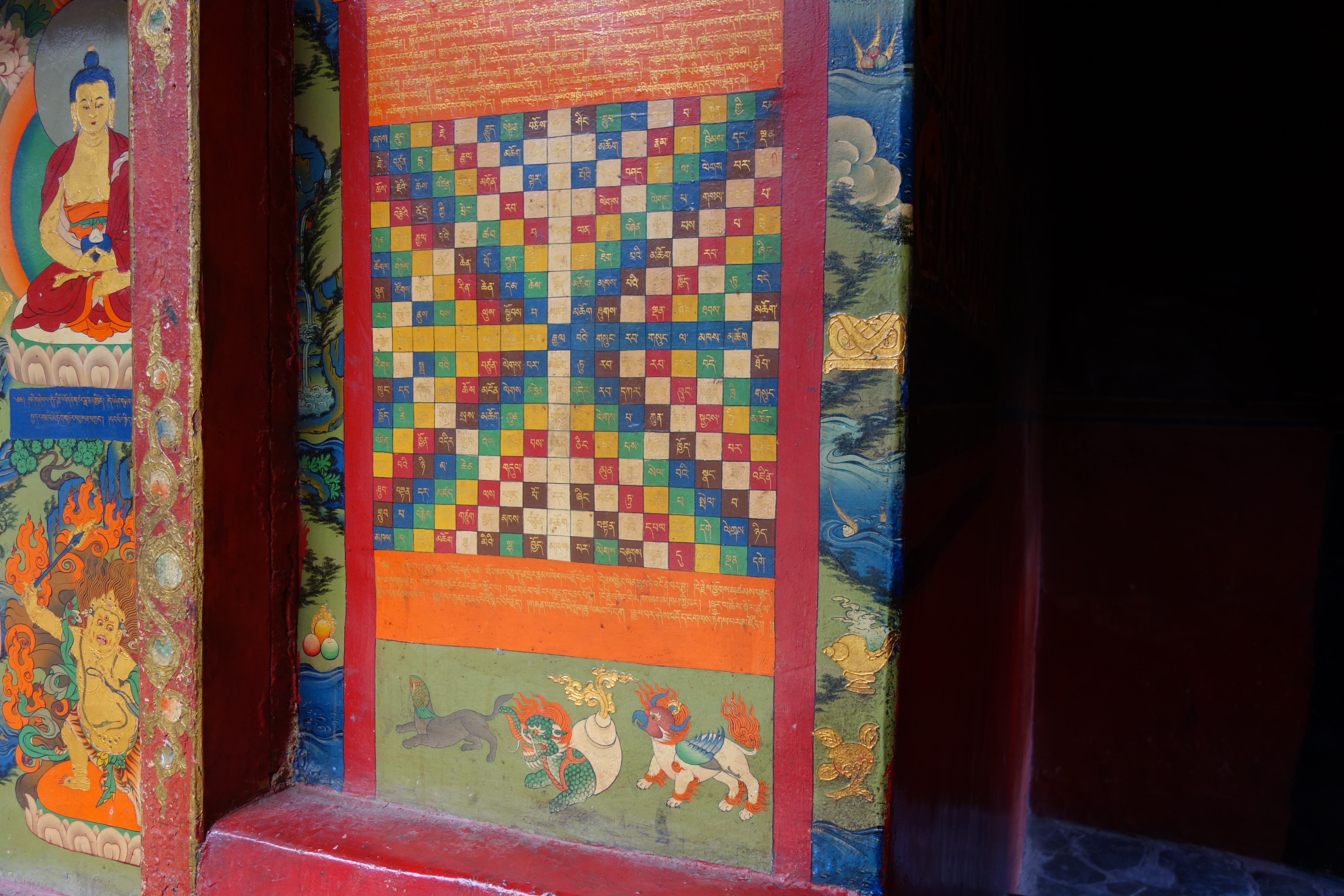
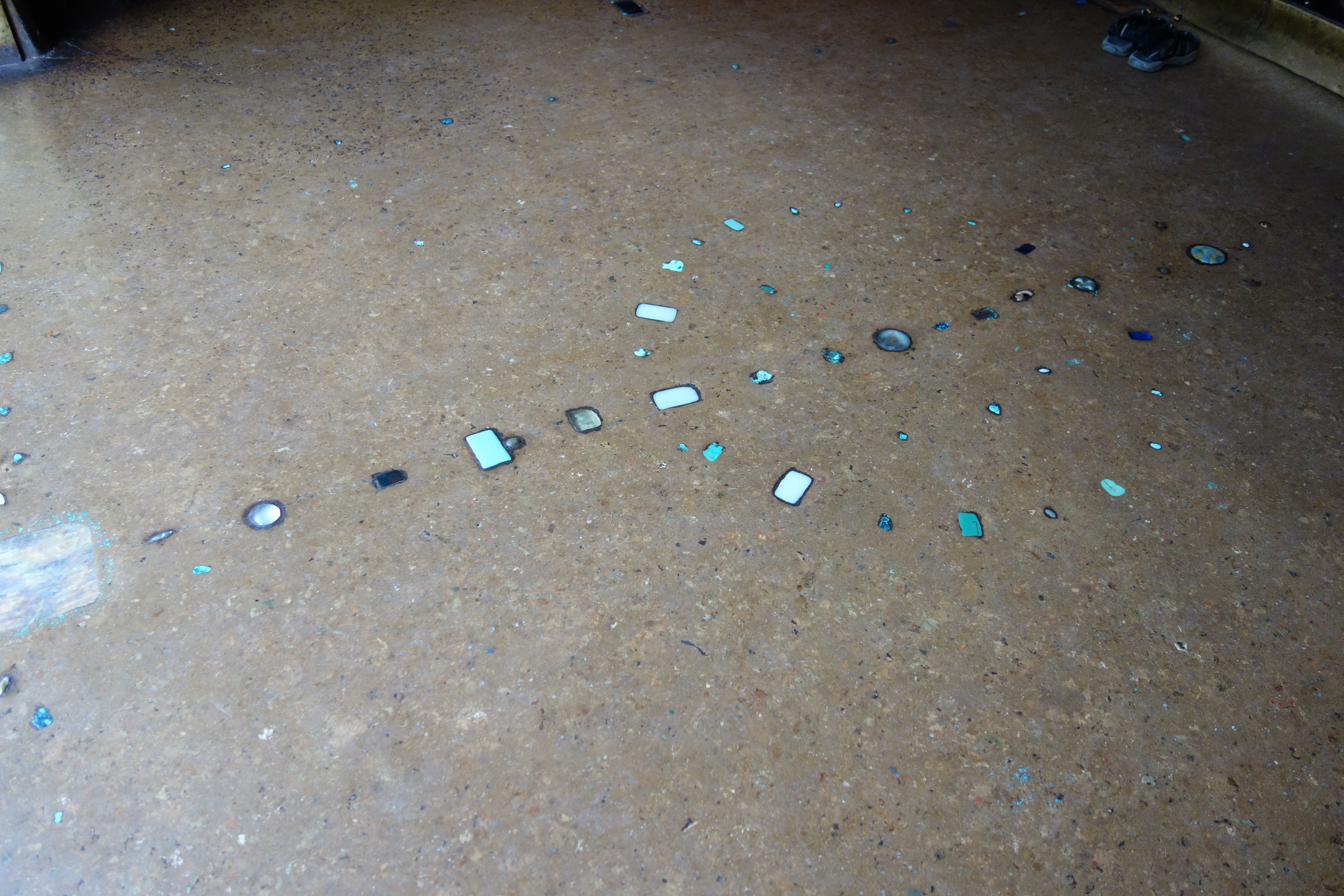
Many of the entry ways just before the thresholds at Tashlungpo had diagrams of inset turpqoise and other stones perhaps as extra symbols of one’s entry into sacred spaces.
This is an ancient symbol represents continuity and good fortune. Unfortunately, its reverse was stolen for use by the Nazis in the 1930s.












































 franceslk