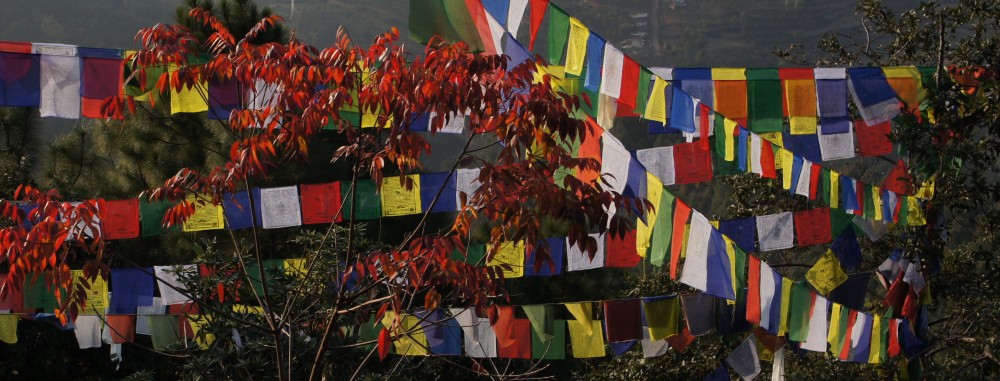
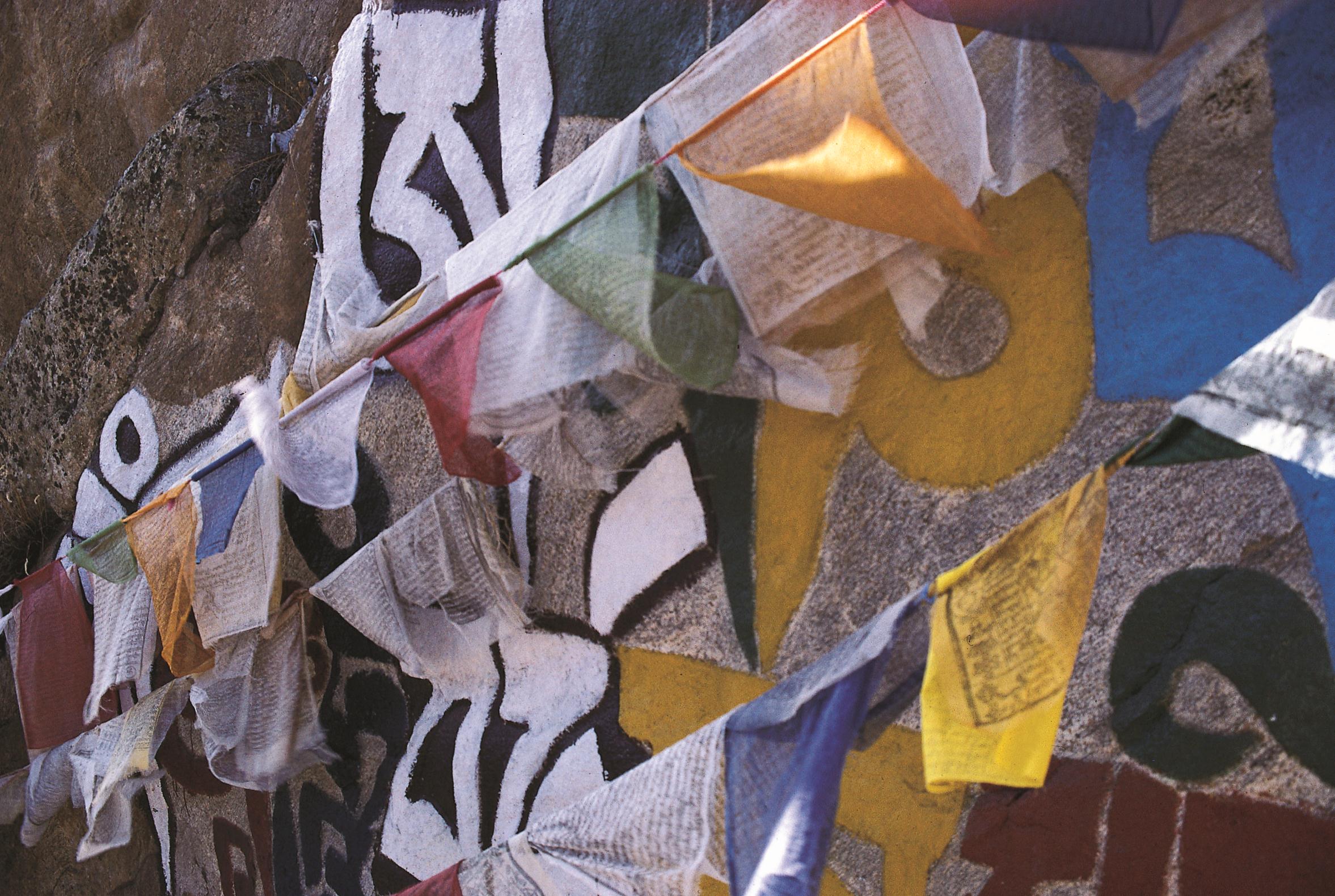
Regardless of your beliefs, prayer flags inspire spiritual significance. The five colours represent each of the five essential elements of life: yellow for earth, green for wood, red for fire, white for iron, and blue for water.
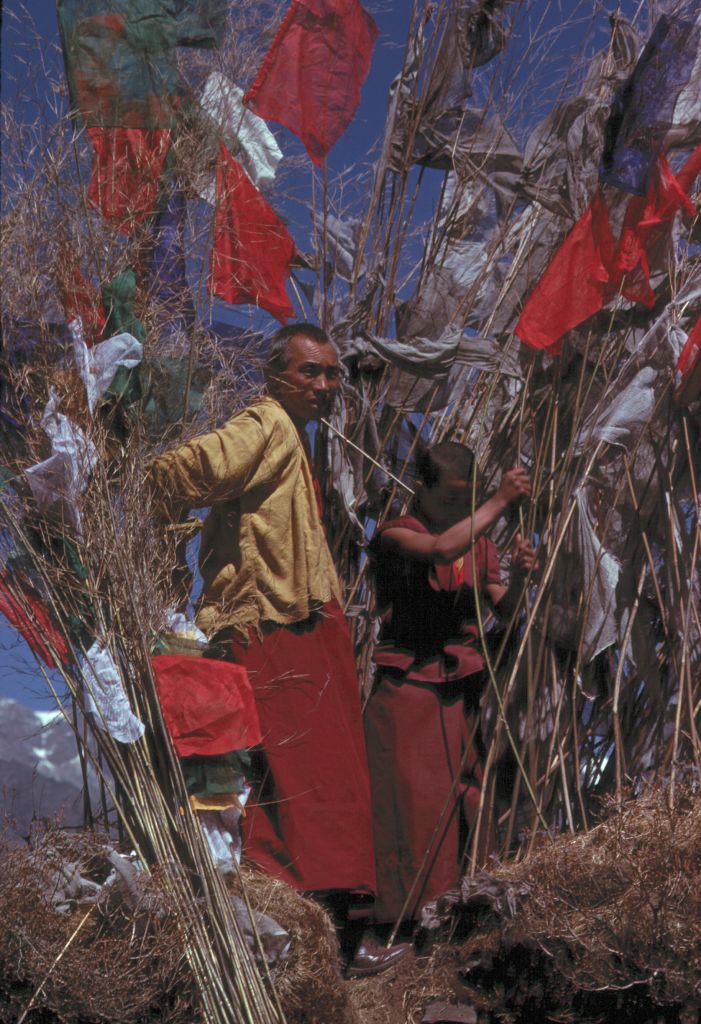
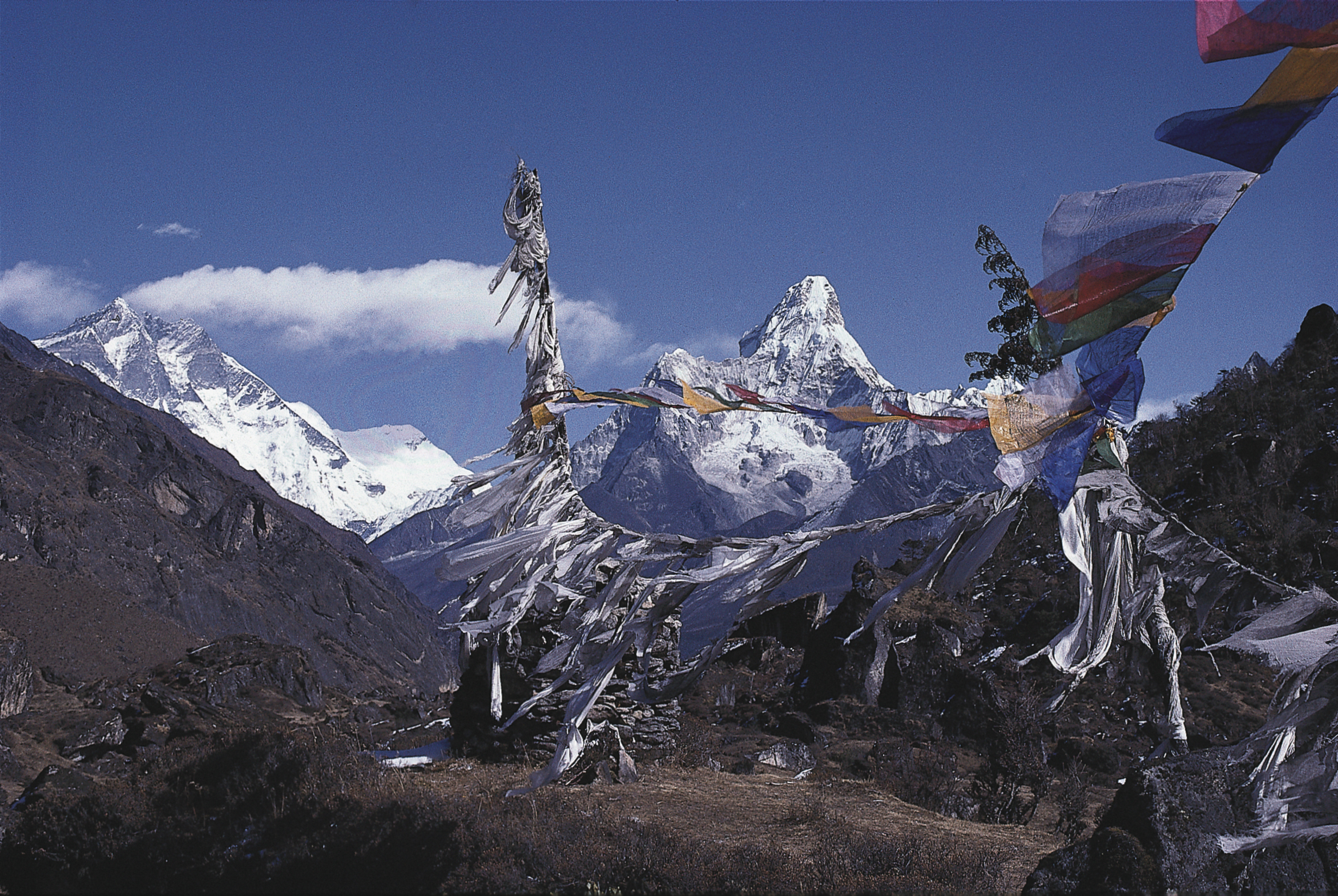
These prayer flags are placed on high points of land and structures all over the Himalaya to harmonize our energy with that of the world around us. On special Buddhist days of the year, the locals replace them with new ones in life’s endless circle of renewal.
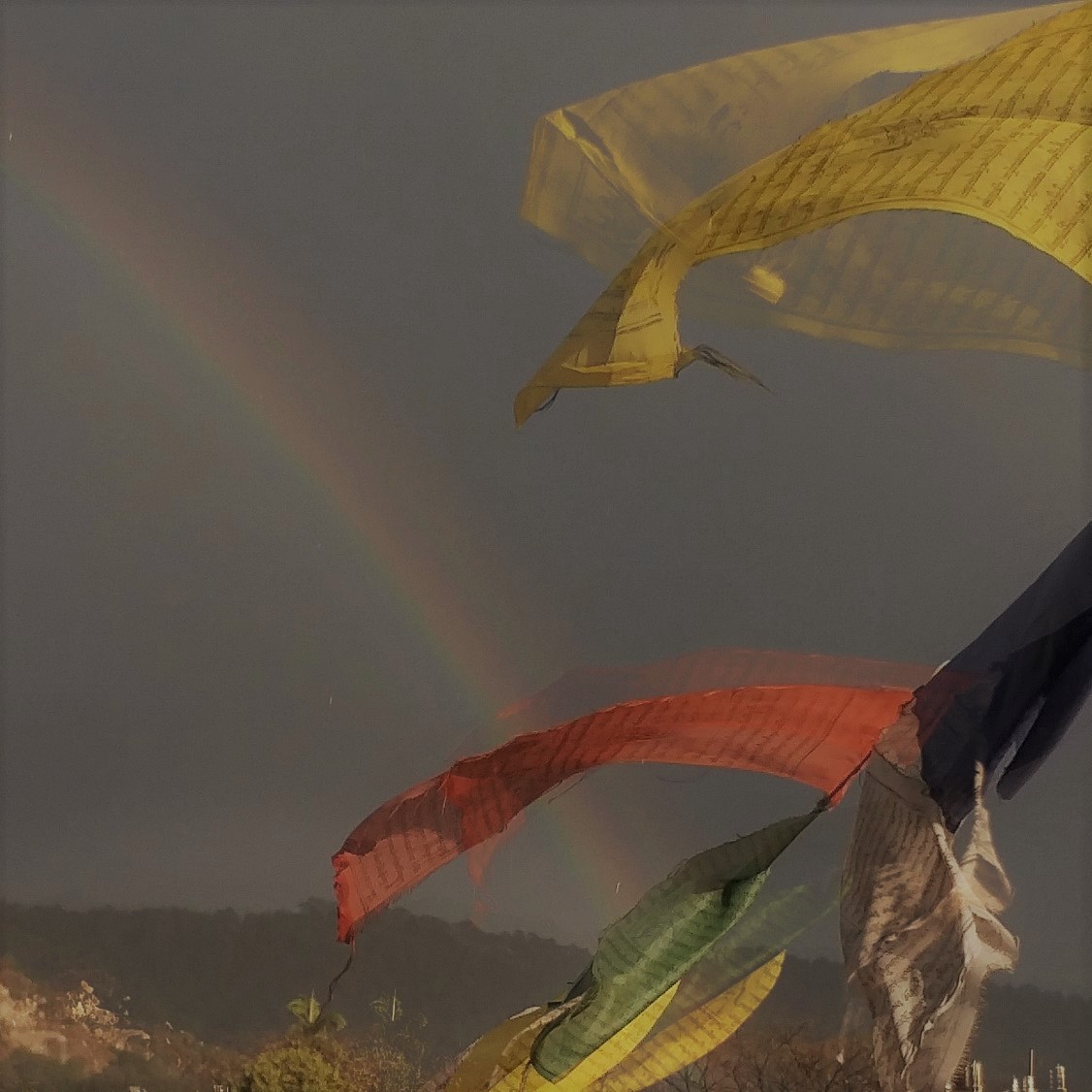
The patterns on them are prayers or symbols of good luck or positive energy. One design is the ‘wind horse,’ the word for wind also means ‘life force’ – both in ourselves and the environment.
Thus, on an outer level, the prayer is sent skyward by the wind, but on an inner level, the galloping steed amplifies our life force. The horse is often accompanied by protective animals, either real or mythical – a bird, the garuda (representing wisdom), a dragon (power), a snow lion (fearless joy) and a tiger (confidence). These four creatures represent some of the qualities of a human being with a strong life force.
The beliefs embrace tiers of explanations with deeper and deeper meanings, but all
these rituals and objects of everyday life — ceremonies, prayer flags, and mani
stones — acknowledge some greater power.
To quote Tibetan writer Thubten Jigme Norbu:1
“You find prayer flags on hills, mountains, by lakes and always on the crest of passes.
It does not really matter whether these spirits exist. What matters is that through
these stories we have come to believe that everywhere, all around us, at all times, there
is some power that is greater than ourselves.”
1 Thubten Jigme Norbu and Colin Turnbull, Tibet: Its History, Religion, and People, Penguin Books, 1968. Pg. 32.



 franceslk